
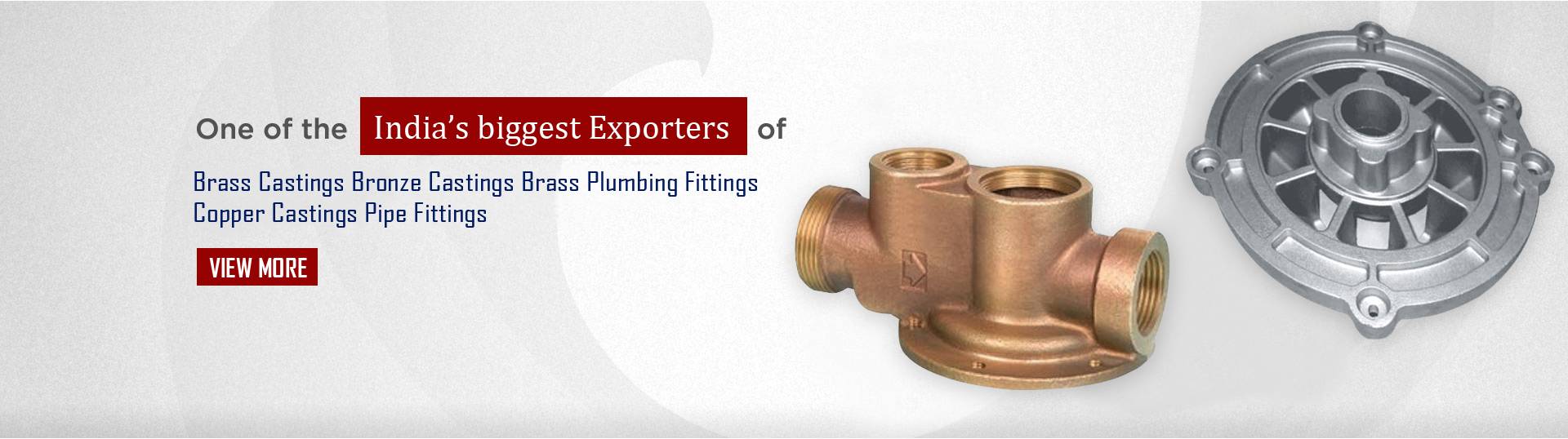


Brass Permanent Mold Casting – Precision Manufacturing Solutions


High-Quality Brass Castings for Critical Industrial Applications
We are one of the leading manufacturers and exporters of Brass Permanent Mold Casting components – GDC (Brass Gravity Die casting) Brass parts from India. We have been supplying precision-engineered Brass castings to the world market for many decades, serving diverse industries across North America, Europe, and Asia-Pacific regions. Our state-of-the-art foundry facility combines traditional metallurgical expertise with modern casting technologies to deliver superior quality Brass components that meet the most demanding specifications. With over three decades of global exposure, our engineering team has developed extensive capabilities in permanent mold casting processes, offering customized solutions for complex geometries and tight tolerances. Our commitment to excellence in manufacturing has positioned us as a trusted partner for OEMs and tier-one suppliers who require consistent quality, competitive pricing, and reliable delivery schedules. We specialize in producing high-integrity Brass castings using permanent mold techniques that ensure superior mechanical properties, excellent surface finish, and dimensional accuracy that exceeds industry standards.
Comprehensive Overview of Brass Permanent Mold Casting Technology
Brass Permanent Mold Casting represents a sophisticated metal forming process where molten Brass alloys are poured into reusable metal molds, typically fabricated from cast iron or steel, to produce components with superior dimensional accuracy and enhanced mechanical properties. This gravity-fed casting methodology offers distinct advantages over sand casting techniques, including finer grain structure, reduced porosity, improved surface finish with Ra values typically ranging from 3.2 to 6.3 micrometers, and tighter dimensional tolerances within ±0.005 inches for critical features. The permanent mold process utilizes preheated molds maintained at temperatures between 300°F to 500°F (150°C to 260°C) to facilitate proper metal flow and solidification characteristics, resulting in castings with enhanced tensile strength approximately 15-20% higher than comparable sand cast components.
The metallurgical advantages of permanent mold casting for Brass alloys include controlled solidification rates that produce refined microstructures with uniform grain distribution, minimizing internal defects such as shrinkage cavities and gas porosity. This process is particularly suitable for medium to high-volume production runs where tooling costs can be amortized over larger quantities, making it economically viable for manufacturing components ranging from 0.5 pounds to 150 pounds in weight. Our foundry employs advanced mold design software and thermal analysis simulations to optimize gating systems, riser placement, and cooling channels, ensuring consistent fill patterns and predictable solidification behavior. The process accommodates complex internal geometries through the use of metal cores and collapsible core systems, enabling the production of intricate Brass castings with internal passages, undercuts, and thin-walled sections that would be challenging to achieve through alternative manufacturing methods.
Environmental sustainability considerations have driven continuous improvements in our permanent mold casting operations, including the implementation of closed-loop melting systems, fume extraction technologies, and energy-efficient induction furnaces that reduce carbon footprint while maintaining precise temperature control within ±5°F throughout the pouring process. The reusability of permanent molds significantly reduces waste generation compared to expendable mold processes, with typical mold life expectancy ranging from 50,000 to 150,000 casting cycles depending on alloy composition, pouring temperature, and maintenance protocols. Our quality management system incorporates in-process monitoring using thermocouples, pyrometers, and spectroscopic analysis to verify melt composition and temperature parameters, ensuring every casting meets specified chemical composition tolerances and mechanical property requirements as defined by ASTM B505, ASTM B584, and customer-specific quality plans.
Brass Permanent Mold Casting – Core Process Technology
Brass Permanent Mold Casting employs gravity pouring techniques where molten Brass alloys flow through engineered gating systems into precision-machined metal molds under atmospheric pressure conditions. This process excels in producing components with consistent wall thickness, smooth as-cast surfaces requiring minimal secondary machining operations, and predictable mechanical properties due to controlled cooling rates that generate fine-grained microstructures. The permanent mold methodology is particularly advantageous for manufacturing high-conductivity Copper-Zinc alloys where thermal and electrical properties must meet stringent specifications, as the rapid heat extraction provided by metal molds produces castings with uniform chemical composition and minimal segregation phenomena.
Our foundry utilizes computer-controlled tilting and rotating permanent mold machines that enable precise mold positioning during pouring operations, facilitating improved metal flow characteristics and reduced turbulence that could introduce oxidation or entrapped air defects. The casting cycle encompasses mold preparation with proprietary coating systems, mold preheating to optimal working temperatures, controlled pouring at predetermined rates, solidification dwell time, and automated ejection mechanisms that minimize handling damage and maintain dimensional consistency. Post-casting operations including controlled cooling protocols, heat treatment processes such as solution annealing or stress relieving, and finishing procedures are integrated into our manufacturing workflow to deliver components that meet or exceed specified hardness values, typically ranging from 60 to 95 HRB for common Brass alloys, and tensile strengths between 40,000 to 100,000 psi depending on composition and temper condition.
Permanent Casting Foundry of Brass – Infrastructure and Capabilities
Our Permanent Casting Foundry of Brass represents a vertically integrated manufacturing facility equipped with modern metallurgical equipment, quality control instrumentation, and skilled technicians trained in advanced casting methodologies. The foundry infrastructure includes multiple induction melting furnaces with capacities ranging from 500 kg to 2,000 kg, enabling batch flexibility and alloy segregation for different customer specifications. Temperature control systems maintain melt superheat within optimal ranges of 100°F to 200°F above liquidus temperatures, ensuring proper fluidity for complete mold filling while minimizing excessive turbulence and oxidation that could compromise casting integrity. Our holding furnaces equipped with electromagnetic stirring systems maintain chemical homogeneity throughout production runs, preventing compositional variations that could affect mechanical properties or machining characteristics.
The permanent mold inventory encompasses over 200 active tool sets fabricated from H-13 tool steel and ductile iron, designed for specific product families and maintained through rigorous preventive maintenance schedules that include periodic inspection, coating renewal, and dimensional verification using coordinate measuring machines with accuracy to 0.0001 inches. Automated mold handling systems reduce cycle times and improve operator safety while maintaining consistent process parameters across multiple production cells. Our foundry operates under ISO 9001:2015 certified quality management protocols, with dedicated inspection areas equipped with spectrometers for chemical analysis, tensile testing machines, hardness testers, pressure testing equipment for leak-critical applications, and non-destructive testing capabilities including radiographic and ultrasonic examination for critical aerospace and defense applications.
Environmental controls within our foundry maintain optimal ambient conditions with temperature regulation, humidity control, and HEPA filtration systems that protect castings from atmospheric contamination during cooling and handling phases. The facility incorporates Industry 4.0 technologies including real-time monitoring systems, statistical process control algorithms, and traceability platforms that document every casting from raw material receipt through final inspection and packaging, providing customers with complete manufacturing history and certification documentation including material test reports, dimensional inspection results, and compliance certificates for relevant international standards.
Brass Die Casting – Complementary Manufacturing Process
Brass Die Casting represents an alternative high-pressure manufacturing technique where molten Brass alloys are injected into steel dies under pressures ranging from 1,500 to 25,000 psi, producing components with exceptional dimensional precision, thin wall capabilities down to 0.040 inches, and superior surface finish that often eliminates secondary machining requirements. While permanent mold casting relies on gravity feed, die casting employs hydraulic or mechanical force to fill mold cavities rapidly, achieving cycle times significantly shorter than gravity processes and enabling high-volume production of complex geometries with intricate details and fine features. This process is particularly suitable for smaller Brass components weighing less than 10 pounds where production volumes exceed 10,000 pieces annually and tooling investment can be justified through reduced piece-part costs and minimal finishing operations.
Our manufacturing capabilities encompass both hot chamber and cold chamber die casting technologies, selected based on alloy composition and melting point characteristics. Hot chamber machines are utilized for lower melting point Brass alloys containing higher Zinc content, where the injection mechanism remains immersed in molten metal, providing rapid cycling and consistent shot weight control. Cold chamber systems are employed for higher melting point Copper-rich Brass compositions, where molten metal is ladled into the injection sleeve for each casting cycle, accommodating alloys that would attack submerged injection components. The die casting process generates castings with superior mechanical properties compared to other casting methods, with tensile strengths exceeding 50,000 psi and yield strengths approaching 30,000 psi for optimized alloy selections, making die cast Brass components suitable for structural applications requiring high strength-to-weight ratios and excellent wear resistance.
Integration of die casting capabilities within our manufacturing portfolio provides customers with comprehensive solutions spanning various production volumes, complexity requirements, and cost targets. Our engineering team conducts thorough manufacturability assessments to recommend the optimal casting process based on component geometry, required tolerances, surface finish specifications, production quantities, and total cost of ownership considerations. This process selection expertise, combined with our ability to transition components between permanent mold and die casting technologies as volume requirements evolve, offers customers flexibility and continuity throughout product lifecycle phases from prototype development through full-scale production and potential redesign iterations.
Material Grades and Specifications for Brass Permanent Mold Casting
Our foundry maintains extensive material qualification databases covering comprehensive ranges of Brass alloy compositions conforming to international standards and customer-specific formulations. The material selection encompasses standard compositions defined by ASTM B505 (Copper Alloy Castings), ASTM B584 (Copper Alloy Sand Castings), and ASTM B30 (Copper Alloy Ingots) specifications, along with equivalent grades from British Standards (BS), Deutsche Industrie Normen (DIN), Japanese Industrial Standards (JIS), Indian Standards (IS), and Chinese National Standards (GB).
Common Brass Casting Alloys and International Equivalents:
| Alloy Designation | ASTM/UNS | DIN | BS | JIS | IS | Copper % | Zinc % | Lead % | Key Properties |
| Yellow Brass | C85800 / UNS C85800 | CuZn30Pb2 | CZ132 | CAC406 | IS 318-4 | 57-59 | Balance | 1.5-2.5 | General purpose, excellent machinability |
| Red Brass | C83600 / UNS C83600 | CuSn5Zn5Pb5 | LG2 | CAC403 | IS 318-1 | 84-86 | 4-6 | 4-6 | Superior corrosion resistance, pressure-tight |
| High Strength Yellow Brass | C86500 / UNS C86500 | CuZn33Pb2 | DCB3 | CAC304 | IS 318-6 | 55-60 | Balance | 1.5-3.5 | Enhanced tensile strength, marine applications |
| Leaded Tin Brass | C92200 / UNS C92200 | CuSn6Zn6Pb3 | LB4 | CAC502 | IS 292 | 86-89 | 3-5 | 1.0-2.5 | Bearing applications, low friction |
| Naval Brass | C46400 / UNS C46400 | CuZn39Sn1 | CZ112 | C4641 | – | 59-62 | Balance | – | Seawater corrosion resistance |
| Free Cutting Brass | C85700 / UNS C85700 | CuZn35Pb2 | DCB1 | CAC407 | IS 319 | 56-60 | Balance | 2.5-3.5 | Optimized for automated machining |
| Silicon Brass | C87500 / UNS C87500 | CuZn13Si3 | – | – | – | 80-83 | 13-15 | – | High strength and corrosion resistance |
| Manganese Bronze | C86200 / UNS C86200 | CuZn25Al5Mn4Fe3 | HT1 | CAC702 | IS 26 | 55-60 | 36-42 | 0.50 max | Structural applications, high yield strength |
Additional Specialty Alloys:
The foundry maintains capabilities for casting specialized Brass compositions including SAE 430B (automotive bearing applications), ASTM B271 (manganese Bronze castings), DIN 1705 (European architectural hardware grades), and proprietary alloy formulations developed in collaboration with customers for specific performance requirements such as enhanced electromagnetic shielding, optimized thermal conductivity exceeding 50 BTU/(hr·ft·°F), or superior dezincification resistance for potable water system components.
Material selection guidance considers multiple performance criteria including mechanical properties (tensile strength, yield strength, elongation, hardness), physical characteristics (density, thermal expansion, electrical conductivity), corrosion resistance in specific environments (saltwater, industrial atmospheres, chemical exposure), machinability ratings per ASTM standards, and regulatory compliance requirements such as NSF/ANSI 61 for drinking water system components, RoHS directives for electronic applications, and REACH regulations for European markets.
Our metallurgical laboratory conducts incoming material verification testing on all raw materials using optical emission spectrometry with accuracy to ±0.1% for major alloying elements and ±0.01% for trace elements, ensuring conformance to specified composition ranges before melting operations commence. Chemical composition certificates accompany every shipment, documenting actual analyzed values for all specified elements including Copper, Zinc, Lead, Tin, Iron, Aluminum, Manganese, Silicon, Nickel, and trace impurities that could affect casting quality or final component performance.
Manufacturing Process Flow and Quality Assurance
The Brass Permanent Mold Casting manufacturing process encompasses multiple sequential operations executed under controlled conditions to ensure consistent quality and dimensional accuracy. The process workflow begins with pattern and tooling design using three-dimensional CAD modeling software integrated with casting simulation packages such as ProCAST or MAGMASOFT, enabling virtual optimization of gating systems, riser design, and thermal management strategies before physical tooling fabrication. Digital twin modeling predicts metal flow patterns, solidification sequences, and potential defect formation zones, allowing preemptive design modifications that reduce development time and minimize prototype iterations.
Detailed Process Sequence:
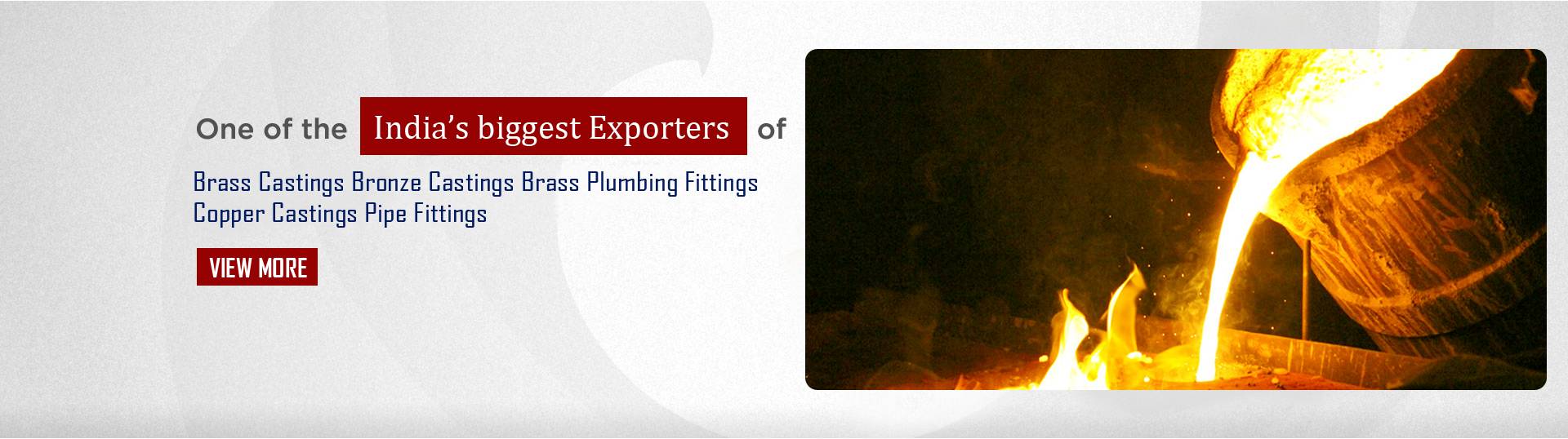
Step 1: Raw Material Preparation and Melting – Virgin Copper ingots conforming to ASTM B115 and Zinc conforming to ASTM B6 are charged into induction melting furnaces along with recycled Brass returns that undergo stringent composition verification. Melting operations employ protective flux covers and controlled atmosphere conditions to minimize oxidation and Zinc volatilization. Temperature is elevated to 100-150°F above the alloy liquidus point, typically reaching 1900-2100°F depending on composition, with continuous electromagnetic stirring ensuring chemical homogeneity throughout the melt volume.
Step 2: Melt Treatment and Degassing – Molten metal undergoes degassing treatments using inert gas bubbling systems or rotary degassing equipment to reduce dissolved hydrogen content below 0.1 ppm, preventing porosity formation during solidification. Grain refinement additions and modification treatments may be introduced at this stage to optimize microstructure characteristics. Spectroscopic analysis confirms chemical composition conformance before transfer to holding furnaces maintained at controlled pouring temperatures.
Step 3: Mold Preparation – Permanent molds fabricated from H-13 tool steel undergo preheating to working temperatures between 300-500°F using gas-fired or electrical heating systems. Proprietary refractory coatings are applied to mold surfaces using spray or brushing techniques, providing controlled heat transfer characteristics, improved surface finish, and mold release properties. Coating thickness typically ranges from 0.010 to 0.030 inches and is monitored using dry film thickness gauges to ensure consistency.
Step 4: Metal Pouring and Solidification – Molten Brass is transferred from holding furnaces to pouring stations using preheated ladles equipped with stopper rods or bottom-pour mechanisms for controlled flow rates. Pouring commences at predetermined rates calculated to fill mold cavities completely while minimizing turbulence and air entrapment. The filling process typically completes within 5 to 15 seconds depending on casting size and complexity. Solidification occurs under controlled cooling conditions with dwell times ranging from 2 to 10 minutes based on section thickness and alloy characteristics.
Step 5: Casting Removal and Finishing – After sufficient solidification and cooling to handling temperatures below 500°F, castings are extracted from molds using automated ejector mechanisms or manual handling procedures. Attached gating systems, risers, and flash material are removed through cutting, grinding, or sawing operations. Castings undergo shot blasting or tumbling processes to remove residual coating material and achieve uniform surface appearance with specified roughness values.
Step 6: Heat Treatment Operations – Depending on alloy composition and application requirements, castings may undergo solution annealing at temperatures between 700-1000°F for 1-4 hours followed by controlled cooling, stress relieving treatments to minimize residual stresses from casting and machining operations, or aging treatments to achieve specified hardness and strength levels. All heat treatment processes are performed in programmable furnaces with documented time-temperature profiles and verified using calibrated thermocouples.
Step 7: Quality Inspection and Testing – Comprehensive inspection protocols include dimensional verification using coordinate measuring machines, optical comparators, and precision gauges; visual examination for surface defects, porosity, or discontinuities; mechanical property testing through tensile specimens machined from production castings or separately cast test bars; hardness testing at specified locations using Rockwell or Brinell methods; and specialized testing including pressure testing for leak-critical components, radiographic examination for internal soundness verification, or ultrasonic inspection for critical aerospace applications.
Machinery and Equipment Infrastructure
Our foundry operates an integrated equipment suite representing significant capital investment in modern casting technologies and supporting infrastructure. The machinery inventory includes twelve induction melting furnaces ranging from 500 kg to 2,000 kg capacity, manufactured by leading equipment suppliers and featuring solid-state power supplies, automatic temperature control systems, and continuous monitoring with data logging capabilities. These furnaces provide precise temperature control within ±5°F, rapid melting cycles averaging 45-60 minutes for 1,000 kg charges, and excellent energy efficiency with power consumption typically 400-450 kWh per ton of molten metal produced.
Material Handling Systems include overhead crane systems with capacities from 5 to 20 tons, automated guided vehicles for internal material transport, and rotating pouring furnaces with capacities from 200 kg to 800 kg equipped with electromagnetic stirring and argon bubbling systems for melt quality optimization. Computerized batching systems ensure accurate charge calculations and maintain consistent alloy chemistry across production batches.
Permanent Mold Casting Machines encompass both manual and automated configurations, with automated systems featuring programmable logic controllers managing mold opening/closing sequences, core insertion and extraction, coating application, and casting ejection operations. Machine capabilities include tilting angles up to 90 degrees for improved mold filling, integrated cooling systems maintaining consistent mold temperatures, and safety interlocks preventing operator exposure to hazardous conditions. Production rates vary from 4 castings per hour for large complex components to 40 castings per hour for smaller simpler geometries.
Finishing Equipment includes cut-off saws with carbide or abrasive blades for gate removal, pedestal grinders for trimming and deburring operations, automated shot blasting systems using steel shot media for surface cleaning and achieving specified roughness values, and vibratory finishing systems for edge rounding and surface enhancement. CNC machining centers provide secondary operations including drilling, tapping, boring, and precision face milling to achieve final dimensional specifications and surface finish requirements.
Heat Treatment Facilities feature electrically heated batch furnaces with working volumes from 10 to 100 cubic feet, programmable controllers with multi-segment ramp-soak capabilities, protective atmosphere systems utilizing nitrogen or endothermic gas to prevent oxidation during thermal processing, and quench tanks with agitation systems for controlled cooling rates. Temperature uniformity surveys conducted per AMS 2750 requirements verify ±10°F temperature uniformity throughout working zones.
Quality Control Laboratory maintains calibrated inspection equipment including a Spectro optical emission spectrometer for chemical composition analysis with accuracy to 0.001% for trace elements, universal tensile testing machines with capacities to 100,000 lbf for mechanical property verification, Rockwell and Brinell hardness testers with certified test blocks traceable to NIST standards, coordinate measuring machines with volumetric accuracy to 0.0001 inches, and specialized equipment including leak testers capable of detecting leakage rates down to 1×10⁻⁶ std cc/sec, digital radiography systems for internal defect detection, and portable ultrasonic thickness gauges.
Typical Parts Produced Through Brass Permanent Mold Casting
Our manufacturing portfolio encompasses diverse component categories serving critical applications across multiple industries. Representative product families include Valve Bodies and Bonnet Assemblies for industrial process control systems, featuring complex internal passages, threaded connections conforming to NPT or ISO standards, and pressure ratings from 150 to 3,000 psi. These components typically range from 1 inch to 12 inches nominal size, weigh between 0.5 to 25 pounds, and require pressure-tight casting quality with porosity-free construction verified through hydrostatic testing procedures.
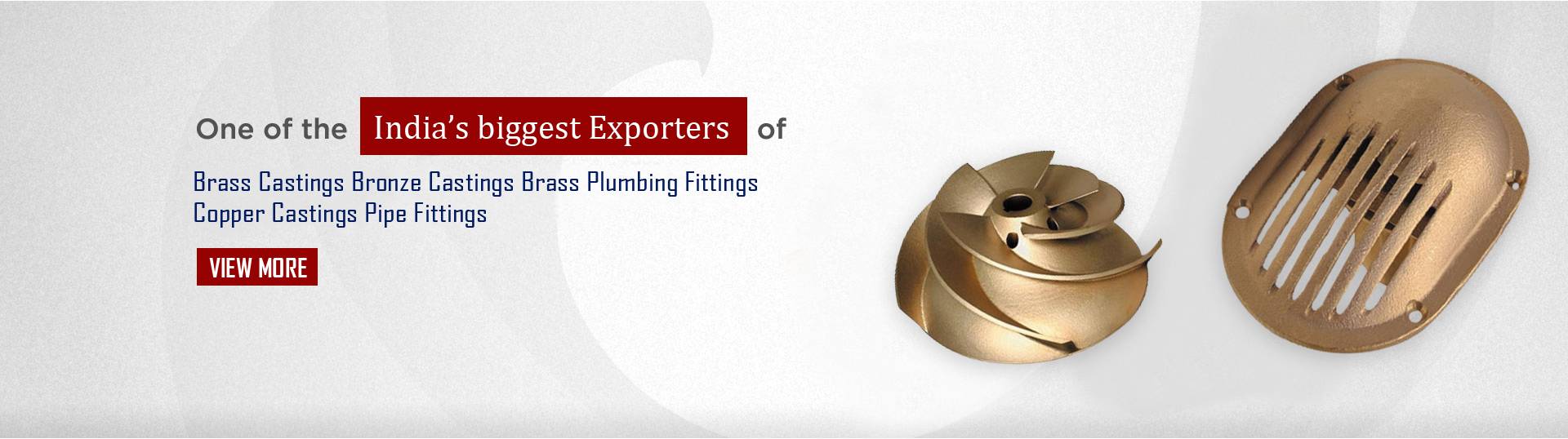
Pump Components including impellers, casings, and volute housings manufactured from corrosion-resistant Brass alloys selected for compatibility with pumped fluids ranging from potable water to mildly corrosive industrial chemicals. Casting designs incorporate complex curved surfaces generated from hydraulic efficiency calculations, with surface finish requirements typically Ra 3.2 micrometers or better to minimize friction losses. Component weights range from 2 to 50 pounds with dimensional tolerances held to ±0.010 inches on critical hydraulic sealing surfaces.
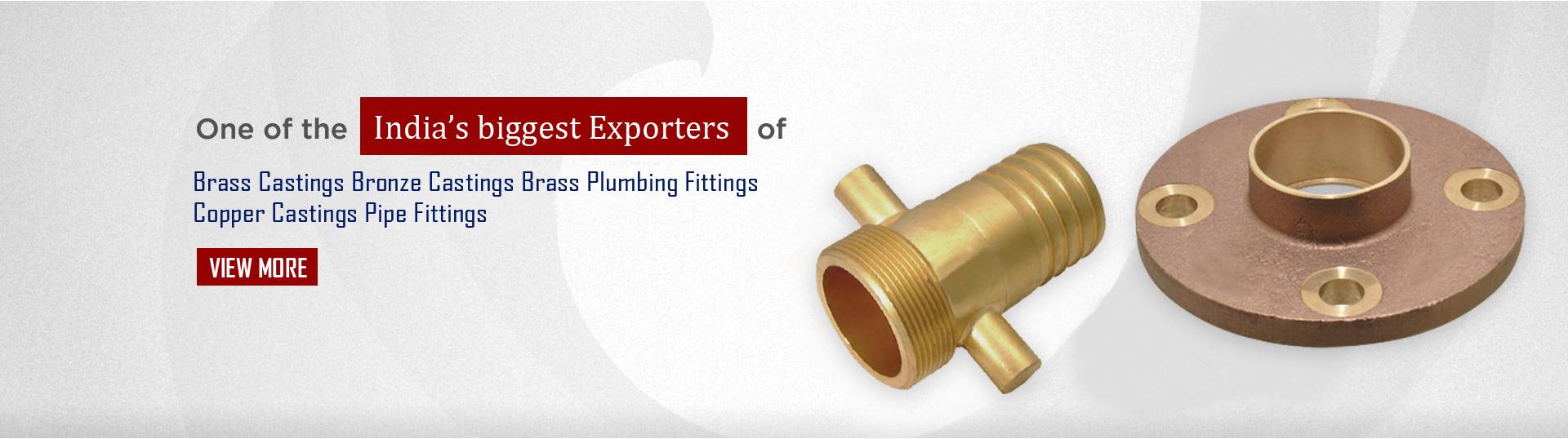
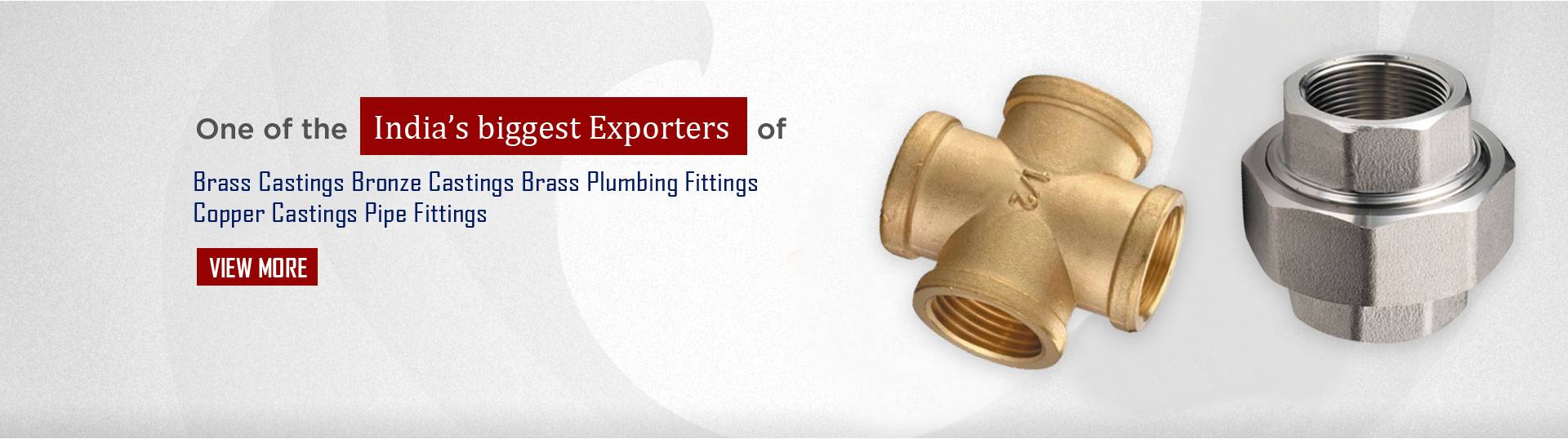
Plumbing Fittings and Fixtures encompassing a broad range of configurations including tees, elbows, couplings, adaptors, and specialty fittings conforming to ASME B16.18, ASME B16.22, and ASME B16.26 dimensional standards. These components serve residential, commercial, and industrial plumbing systems, with material specifications meeting NSF/ANSI 61 requirements for potable water contact and dezincification resistance per ASTM B858 standards. Production volumes for standard catalog items range from 10,000 to 500,000 pieces annually, with custom configurations available for OEM applications.
Electrical and Electronic Components including connector housings, bus bars, grounding hardware, and electromagnetic shielding enclosures requiring high electrical conductivity values exceeding 20% IACS and precise dimensional control for multi-part assembly interfaces. These components serve telecommunications equipment, power distribution systems, and electronic instrumentation applications where electrical performance and environmental durability are critical design parameters.
Marine Hardware such as propeller components, shaft bearings, through-hull fittings, seacocks, and deck hardware manufactured from Naval Brass and other Copper-Zinc-Tin alloys offering superior resistance to saltwater corrosion and biofouling. These components undergo rigorous testing including extended saltwater immersion studies and cyclic loading evaluations to verify performance under harsh marine environments. Weight ranges span from 0.25 pounds for small deck fittings to 75 pounds for large propeller components.
Automotive and Transportation Components including transmission synchronizer rings, bearing retainers, brake system components, and fluid control elements requiring specific friction characteristics, wear resistance, and dimensional stability across temperature ranges from -40°F to 300°F. These applications demand stringent quality controls including 100% dimensional verification, mechanical property testing on statistical sampling bases, and traceability documentation supporting automotive quality management standards such as IATF 16949.
Architectural and Decorative Hardware encompassing door handles, locksets, hinges, railings, and ornamental fixtures where aesthetic appearance and surface finish quality are primary considerations. These components may undergo additional finishing operations including polishing, plating with Chrome or Nickel, powder coating, or patina treatments to achieve specified decorative effects while maintaining corrosion resistance and mechanical performance.
Technical Drawing and Dimensional Specifications
Standard Valve Body Configuration – Dimensional Reference
┌─────────────────┐
│ BONNET SEAT │
│ │
└────────┬────────┘
│
┌─────────┴─────────┐
│ │
───────────┤ BODY CAVITY ├───────────
INLET │ │ OUTLET
PORT │ ┌─────────┐ │ PORT
───────────┤ │ STEM │ ├───────────
│ │ BORE │ │
│ └─────────┘ │
│ │
└───────────────────┘
│
┌────────┴────────┐
│ DRAIN PORT │
└─────────────────┘
Standard Dimensional Table for Brass Valve Bodies:
| Nominal Size | Overall Length (inches) | Overall Height (inches) | Port Diameter (inches) | Wall Thickness (inches) | Weight (lbs) | Pressure Rating (psi) |
| 1/2″ | 3.50 ± 0.030 | 2.25 ± 0.020 | 0.625 ± 0.010 | 0.180 min | 0.75 | 600 |
| 3/4″ | 4.00 ± 0.030 | 2.50 ± 0.020 | 0.875 ± 0.010 | 0.200 min | 1.10 | 600 |
| 1″ | 4.75 ± 0.040 | 3.00 ± 0.025 | 1.125 ± 0.012 | 0.220 min | 1.85 | 600 |
| 1-1/2″ | 6.00 ± 0.050 | 3.75 ± 0.030 | 1.750 ± 0.015 | 0.260 min | 3.50 | 600 |
| 2″ | 7.25 ± 0.060 | 4.50 ± 0.035 | 2.250 ± 0.018 | 0.300 min | 5.75 | 600 |
| 3″ | 9.50 ± 0.080 | 6.00 ± 0.045 | 3.250 ± 0.022 | 0.350 min | 12.50 | 400 |
| 4″ | 12.00 ± 0.100 | 7.50 ± 0.055 | 4.250 ± 0.025 | 0.400 min | 22.00 | 400 |
Standard Manufacturing Tolerances:
| Dimension Type | Standard Tolerance | Precision Tolerance | Measurement Method |
| Linear Dimensions (0-6 inches) | ±0.015 inches | ±0.005 inches | Calipers, Micrometers |
| Linear Dimensions (6-12 inches) | ±0.025 inches | ±0.010 inches | Calipers, CMM |
| Linear Dimensions (>12 inches) | ±0.040 inches | ±0.015 inches | CMM, Optical Comparator |
| Hole Diameters | ±0.010 inches | ±0.003 inches | Pin Gauges, Bore Micrometers |
| Thread Dimensions | Per ASME B1.20.1 | Class 2A/2B | Thread Gauges |
| Flatness | 0.005 per inch | 0.002 per inch | Surface Plate, Dial Indicator |
| Concentricity | 0.010 TIR | 0.003 TIR | CMM, Dial Indicator |
| Wall Thickness | ±10% nominal | ±5% nominal | Ultrasonic Thickness Gauge |
| Surface Roughness | Ra 6.3 μm | Ra 3.2 μm | Surface Profilometer |
Surface Finishing and Plating Options
As-Cast Surface Finish – Standard permanent mold castings exhibit surface roughness values between Ra 3.2 to 6.3 micrometers (125-250 microinches RMS) depending on alloy composition, mold coating characteristics, and pouring temperature parameters. This finish level is suitable for many industrial applications and provides an excellent substrate for subsequent machining, plating, or coating operations. The as-cast surface typically displays a uniform appearance with subtle mold parting lines and minimal surface irregularities.
Shot Blasted Finish – Abrasive media blasting using steel shot or grit produces uniformly textured surfaces with controlled roughness profiles, removing residual mold coating material and providing consistent appearance across all casting surfaces. Shot blasting operations can achieve roughness values from Ra 1.6 to 4.0 micrometers depending on media selection and processing parameters. This treatment improves subsequent coating adhesion and provides aesthetic uniformity for components requiring decorative finishing.
Machined Surface Finish – Secondary machining operations using carbide cutting tools generate precision surfaces with roughness values from Ra 0.4 to 1.6 micrometers (16-63 microinches RMS) suitable for sealing surfaces, bearing journals, and precision assembly interfaces. Our machining capabilities include turning, milling, drilling, boring, and grinding operations performed on CNC equipment maintaining positional accuracy within 0.0005 inches and surface finish consistency across production batches.
Electroplating and Surface Coatings:
| Plating Type | Thickness Range | Primary Benefits | Typical Applications | Testing Standards |
| Nickel (Electrolytic) | 0.0002″ – 0.001″ | Corrosion protection, wear resistance | Plumbing fixtures, hardware | ASTM B456 |
| Chrome (Decorative) | 0.00001″ – 0.00005″ | Aesthetic appearance, tarnish resistance | Architectural hardware | ASTM B456 |
| Chrome (Hard) | 0.0005″ – 0.005″ | Exceptional hardness (900-1100 HV), wear resistance | Hydraulic components, tools | ASTM B177 |
| Zinc | 0.0002″ – 0.001″ | Sacrificial corrosion protection | Industrial hardware | ASTM B633 |
| Tin | 0.0001″ – 0.0005″ | Solderability, food-safe applications | Electrical contacts, food equipment | ASTM B545 |
| Silver | 0.00005″ – 0.0002″ | Electrical conductivity, solderability | Electronic connectors | ASTM B700 |
| Powder Coating | 0.002″ – 0.006″ | Decorative finish, chemical resistance | Architectural elements | ASTM D3359 |
Passivation and Chemical Treatments – Specialized surface treatments including chromate conversion coatings per MIL-DTL-5541 providing enhanced corrosion resistance with minimal dimensional impact, acid pickling for oxide removal, and proprietary passivation processes optimized for specific environmental exposure conditions. These treatments are particularly valuable for marine applications and components operating in corrosive industrial atmospheres.
Lacquer and Clear Coating Systems – Transparent protective coatings preserving the natural Brass appearance while preventing tarnishing and oxidation. These systems include acrylic lacquers, polyurethane clear coats, and specialized formulations offering UV resistance and extended outdoor durability. Coating thickness typically ranges from 0.0005 to 0.002 inches with excellent adhesion characteristics and minimal impact on dimensional tolerances.
Industries Served and Application Sectors
Plumbing and HVAC Industry – Our Brass permanent mold castings serve as critical components in residential and commercial plumbing systems, including valves, fittings, manifolds, and flow control devices. These applications demand compliance with NSF/ANSI 61 drinking water system component standards, NSF/ANSI 372 lead content restrictions (weighted average ≤0.25%), and ASME B16 dimensional standards. The superior pressure integrity achieved through permanent mold casting makes these components suitable for systems operating at pressures up to 600 psi with extended service life expectations exceeding 50 years under normal operating conditions.
Marine and Offshore Industry – Marine applications represent a significant market segment where corrosion resistance and mechanical reliability are paramount. Our Naval Brass castings serve in propulsion systems, hull penetrations, deck hardware, and fluid handling equipment exposed to continuous saltwater environments. Component specifications often reference MIL-B-16541 (Marine Brass Castings), ASTM B584 alloy C46400 and C48500 compositions, and specialized testing protocols including 1,000-hour salt spray exposure per ASTM B117 and stress corrosion cracking resistance verification per ASTM G37 methods.
Automotive and Transportation Sector – Brass castings find applications in transmission components, brake system elements, fuel system fittings, and fluid control devices where specific friction characteristics, wear resistance, and dimensional stability across temperature extremes are required. These applications operate under stringent quality management systems conforming to IATF 16949 automotive quality standards, with full traceability documentation, advanced product quality planning (APQP) protocols, and production part approval processes (PPAP) supporting new program launches and ongoing production monitoring.
Industrial Valve and Pump Manufacturers – OEM customers manufacturing
Continue
Jan 2
industrial process control equipment utilize our Brass castings for valve bodies, pump housings, impellers, and fluid handling components serving chemical processing, water treatment, food and beverage production, and general industrial fluid systems. These applications frequently require pressure testing verification, non-destructive examination, and material certification documentation supporting customer quality assurance requirements and end-user specifications.
Electronics and Telecommunications – High conductivity Brass alloys serve in connector housings, bus bar systems, grounding hardware, and electromagnetic shielding applications where electrical performance is critical. Components must meet electrical conductivity requirements typically exceeding 20% IACS, maintain dimensional stability during thermal cycling from -40°C to +125°C, and provide reliable electrical connection interfaces throughout product service life. Applications may require compliance with RoHS directives restricting hazardous substances and REACH regulations controlling chemical substances in European markets.
Architectural and Building Products – Decorative Brass components serve in door hardware, railing systems, lighting fixtures, and architectural elements where aesthetic appearance, corrosion resistance, and mechanical performance combine to create durable building products. These applications may reference BHMA (Builders Hardware Manufacturers Association) standards for mechanical performance, ANSI/BHMA A156 series specifications for specific product categories, and specialized finish designations per US architectural finish standards.
Water and Wastewater Treatment – Municipal water systems, wastewater treatment facilities, and industrial water handling operations utilize Brass castings in valve assemblies, metering devices, flow control equipment, and sampling systems. Components must demonstrate compatibility with chlorinated water, resistance to dezincification corrosion per ASTM B858 testing protocols, and long-term mechanical reliability under continuous operating conditions. Materials meeting NSF/ANSI 61 potable water system requirements ensure consumer safety and regulatory compliance.
Medical and Laboratory Equipment – Specialized Brass components serve in laboratory instrumentation, medical gas distribution systems, and pharmaceutical processing equipment where material compatibility, cleanliness, and precision are essential. These applications may require certifications of material composition excluding specific elements, surface finish documentation, and cleaning protocols ensuring particle-free delivery. Components conform to SEMI standards for semiconductor equipment applications and ASME BPE specifications for bioprocessing equipment where applicable.
Production Turnaround Time and Delivery Scheduling
Standard production turnaround time for Brass Permanent Mold Castings spans 4 to 6 weeks from purchase order receipt to finished goods shipment, encompassing tooling preparation or reactivation, raw material procurement and verification, melting and casting operations, heat treatment processes, finishing operations, quality inspection and testing, and packaging for international shipment. This timeline assumes existing permanent mold tooling is available and maintained in production-ready condition. For new component development requiring mold design, fabrication, and first article approval, lead times extend to 12-16 weeks depending on component complexity, tooling requirements, and customer approval cycles.
Expedited Production Services – Our manufacturing flexibility enables accelerated delivery schedules for urgent requirements, with expedited turnaround available in 2-3 weeks for components using existing tooling and standard material grades. Rush production services incorporate priority scheduling through manufacturing operations, dedicated quality inspection resources, and premium freight arrangements ensuring on-time delivery to customer facilities. These expedited programs are particularly valuable for supporting equipment repair situations, production line emergencies, and new product launch schedules requiring compressed development timelines.
Production Capacity and Volume Flexibility – Our foundry maintains production capacity exceeding 500,000 pounds of Brass castings annually, with individual component volumes ranging from prototype quantities of 10-25 pieces through production runs exceeding 50,000 pieces per year. The permanent mold process offers economic advantages for production volumes between 500 and 100,000 pieces annually, with tooling costs amortized across production quantities and competitive piece-part pricing achieved through process optimization and efficient manufacturing practices. Batch sizes can be tailored to customer inventory management strategies, with minimum order quantities typically 50-100 pieces for existing tooling and 500-1,000 pieces for new tooling development programs.
Delivery and Logistics Coordination – International shipping services encompass full container load (FCL) and less-than-container load (LCL) ocean freight arrangements, air freight services for time-sensitive shipments, and comprehensive customs documentation supporting import clearance procedures. Our logistics team coordinates with freight forwarders, customs brokers, and transportation carriers to ensure smooth delivery to customer facilities across North America, Europe, and Asia-Pacific regions. Standard packaging utilizes corrugated cartons, wooden crates, or custom packaging solutions incorporating customer-specified labeling, bar coding, and product identification systems. Export documentation includes commercial invoices, packing lists, certificates of origin, material test reports, and specialized certificates conforming to customer and regulatory requirements.
Performance Metrics and Quality Benchmarks
Mechanical Property Ranges for Common Brass Casting Alloys:
| Property | C83600 Red Brass | C85800 Yellow Brass | C86500 Manganese Bronze | Test Method |
| Tensile Strength (psi) | 35,000 – 45,000 | 40,000 – 50,000 | 65,000 – 90,000 | ASTM E8 |
| Yield Strength (psi) | 15,000 – 22,000 | 18,000 – 25,000 | 30,000 – 45,000 | ASTM E8 |
| Elongation (%) | 20 – 30 | 15 – 25 | 12 – 20 | ASTM E8 |
| Hardness (HRB) | 50 – 70 | 60 – 80 | 75 – 95 | ASTM E18 |
| Impact Strength (ft-lbs) | 8 – 15 | 10 – 18 | 15 – 25 | ASTM E23 |
| Thermal Conductivity (BTU/hr·ft·°F) | 62 – 70 | 70 – 85 | 40 – 50 | ASTM E1461 |
| Electrical Conductivity (%IACS) | 18 – 22 | 25 – 30 | 15 – 20 | ASTM B193 |
| Coefficient of Thermal Expansion (in/in/°F x 10⁻⁶) | 10.2 – 11.0 | 11.0 – 11.6 | 11.2 – 11.8 | ASTM E228 |
Quality Performance Indicators – Our manufacturing operations maintain stringent quality metrics including first-pass yield rates exceeding 98% for established production components, dimensional conformance rates above 99.5% for critical features measured through statistical process control methodologies, and on-time delivery performance consistently achieving 96% or better for scheduled shipments. Reject rates for internal defects detected through radiographic or ultrasonic examination remain below 0.5% for pressure-tight casting grades, demonstrating the consistent soundness achieved through optimized permanent mold processes.
Process Capability Studies – Statistical analysis of critical dimensions demonstrates process capability indices (Cpk) exceeding 1.33 for controlled features, indicating stable manufacturing processes producing components well within specified tolerance bands. These capability studies are updated quarterly and shared with customers requiring documented evidence of manufacturing process control supporting their quality management systems and continuous improvement initiatives.
Technical Question and Answer Section
Q1: What are the primary advantages of Brass Permanent Mold Casting compared to sand casting methods? Brass Permanent Mold Casting delivers superior surface finish with roughness values of Ra 3.2-6.3 μm versus Ra 12-25 μm for sand castings, tighter dimensional tolerances achieving ±0.005″ on critical features, approximately 15-20% higher mechanical strength due to refined microstructure, reduced porosity levels, faster production cycles, and lower per-piece costs for medium to high volume production runs exceeding 1,000 pieces annually.
Q2: How do you ensure consistent chemical composition throughout production batches? Our foundry employs optical emission spectrometry on every heat, analyzing molten metal composition before pouring operations commence. Continuous electromagnetic stirring in holding furnaces maintains homogeneity, and we conduct verification testing on solidified samples from each pour. All raw materials undergo incoming inspection with certificates of analysis, and our metallurgical laboratory maintains NIST-traceable calibration standards ensuring measurement accuracy within ±0.01% for major alloying elements.
Q3: What minimum wall thickness can be reliably cast using permanent mold processes? Minimum practical wall thickness for Brass Permanent Mold Casting typically ranges from 0.125 to 0.188 inches (3.2-4.8mm) depending on component geometry, alloy fluidity characteristics, and section length. Thinner sections down to 0.090 inches may be achievable for small components with favorable geometry. Our engineering team conducts casting simulation analysis to verify fill capability and recommend optimal wall thickness distributions for reliable production and mechanical performance.
Q4: Do you provide material certifications and test reports with shipments? Yes, comprehensive material documentation accompanies every shipment including certificates of analysis documenting actual chemical composition of cast alloys, mechanical property test results from production lots showing tensile strength, yield strength, elongation and hardness values, dimensional inspection reports for critical features, heat treatment certifications when applicable, and compliance statements for relevant standards such as ASTM, RoHS, REACH, or NSF/ANSI 61 as required by customer specifications.
Q5: What surface finishing operations are available for Brass castings? We offer comprehensive finishing capabilities including precision CNC machining to achieve Ra 0.4-1.6 μm surface finish, vibratory deburring and edge radiusing, shot blasting for uniform texture and appearance, electroplating with Nickel, Chrome, Zinc or Tin deposits, powder coating with decorative or protective finishes, clear lacquering to prevent tarnishing, and specialized treatments like passivation or chromate conversion coatings providing enhanced corrosion resistance for demanding environmental exposures.
Q6: Can you manufacture components meeting NSF/ANSI 61 requirements for potable water systems? Absolutely, we maintain extensive experience producing Brass castings conforming to NSF/ANSI 61 drinking water system component requirements and NSF/ANSI 372 lead content restrictions (weighted average ≤0.25%). Our quality system includes material composition verification, third-party testing laboratory relationships for NSF protocol testing, and documented manufacturing controls ensuring consistent compliance. We provide complete certification documentation supporting customer NSF listing applications or regulatory submittals.
Q7: What is your approach to new product development and prototype casting services? Our engineering team collaborates with customers from initial concept through production launch, offering design for manufacturability consultations, 3D CAD modeling and casting simulation analysis, rapid prototype tooling options for accelerated development timelines, first article inspection with comprehensive dimensional reports, mechanical testing validation, and iterative refinement of casting designs optimizing quality, cost and performance. Prototype quantities from 10-50 pieces can typically be delivered within 4-6 weeks using temporary tooling approaches.
Q8: How do you control dimensional tolerances across production runs? We implement statistical process control methodologies monitoring critical dimensions throughout production batches, utilizing coordinate measuring machines with 0.0001″ accuracy for precision verification, maintaining calibrated inspection equipment traceable to NIST standards, conducting first-piece and in-process inspection at defined intervals, and documenting all measurements in our quality management database. Process capability studies demonstrate Cpk values exceeding 1.33 for controlled features, ensuring stable manufacturing processes producing consistent components within specification limits.
Q9: What are typical lead times for developing new permanent mold tooling? New permanent mold design and fabrication requires 8-12 weeks depending on component complexity, tooling material selection, and required features such as collapsible cores or intricate gating systems. The process encompasses 3D mold design with casting simulation validation, CNC machining of mold halves from H-13 tool steel or ductile iron, assembly and fit-up verification, initial sampling and process optimization, and first article approval. Rush tooling programs may accelerate this timeline to 6-8 weeks with expedited scheduling and premium charges.
Q10: Can you accommodate special packaging requirements or customer-specific labeling? Yes, our packaging services are fully customizable to meet customer requirements including corrugated cartons, wooden crates, foam cushioning, plastic bags with desiccants, segregated compartments for mixed SKU shipments, customer-supplied labels or bar codes, specific pallet configurations, and specialized export packaging for international shipping. We maintain flexibility in packaging approaches supporting customer inventory management systems, point-of-use delivery requirements, and just-in-time manufacturing schedules. Packaging cost considerations are addressed during quotation development.
Q11: What quality management system certifications does your facility maintain? Our foundry operates under ISO 9001:2015 certified quality management system with annual third-party audits maintaining registration currency. We implement additional customer-specific quality requirements including PPAP documentation for automotive applications, AS9100 protocols for aerospace customers when applicable, and comprehensive inspection and testing programs conforming to ASTM, ASME, and military specifications. Our quality manual, procedures, and work instructions establish standardized manufacturing and inspection protocols ensuring consistent product quality across all production batches and customer programs.
Q12: How do you ensure permanent molds maintain dimensional accuracy over their service life? Permanent mold maintenance programs include scheduled dimensional verification using coordinate measuring machines every 5,000-10,000 casting cycles, visual inspection for crack formation or erosion, refurbishment operations including weld repair and remachining when necessary, and coating renewal maintaining optimal heat transfer characteristics. Molds are retired from service when dimensional drift exceeds acceptable limits or structural degradation compromises casting quality. Typical mold life expectancy ranges from 50,000 to 150,000 castings depending on alloy melting temperature, component geometry, and operational parameters.
Q13: What size range of components can you produce through permanent mold casting? Our manufacturing capabilities span components weighing from 0.5 pounds to 150 pounds, with maximum envelope dimensions approximately 30 inches x 24 inches x 18 inches depending on configuration and geometry. Smaller precision components below 0.5 pounds may be better suited for die casting processes offering tighter tolerances and superior surface finish, while larger components exceeding dimensional or weight limits can potentially be produced through sand casting methodologies. Our engineering team evaluates each application recommending the optimal casting process based on technical requirements and economic considerations.
Q14: Do you provide machining services in addition to casting operations? Yes, we offer comprehensive secondary machining capabilities including CNC turning, milling, drilling, tapping, and grinding operations transforming as-cast components into fully machined finished parts ready for assembly. Our machining department operates multiple three-axis and four-axis CNC machining centers, maintains cutting tool inventory optimized for Brass alloy characteristics, and implements fixture designs enabling efficient processing of cast components. This vertical integration provides customers single-source convenience, eliminates coordination complexity with multiple suppliers, and ensures optimal machining parameters considering as-cast material conditions.
Q15: What design features should be considered when developing components for permanent mold casting? Critical design considerations include maintaining uniform wall thickness between 0.125″ to 0.75″ for optimal solidification characteristics, incorporating draft angles of 2-5 degrees on vertical surfaces facilitating casting removal from molds, avoiding sharp internal corners that concentrate stress and complicate machining, designing parting lines along geometrically favorable locations minimizing flash and secondary operations, providing adequate gating and riser access without compromising component functionality, and considering machining stock allowances of 0.060″ to 0.125″ on surfaces requiring precision finish or dimensional accuracy. Our engineering team provides design for manufacturability feedback optimizing casting success, quality, and cost efficiency.
Why Choose Our Brass Permanent Mold Casting Services
Three Decades of Global Manufacturing Excellence – Our company brings over 30 years of specialized experience in Brass casting technologies serving customers across North America, Europe, Australia, and Asia-Pacific markets. This extensive background encompasses diverse industry applications, hundreds of unique component configurations, and continuous process refinement delivering consistent quality improvements, cost optimizations, and technical capability expansion. Our engineering team’s accumulated knowledge base enables rapid problem-solving, proactive manufacturability consultations, and innovative solutions addressing challenging casting requirements that competitors may decline or struggle to execute successfully.
Exceptional Communication and Customer Support – We recognize that effective collaboration requires clear, responsive communication throughout project lifecycles from initial inquiry through ongoing production support. Our customer service team maintains English language proficiency enabling precise technical discussions, rapid quotation turnaround typically within 48 hours, and proactive status updates keeping customers informed of production progress, potential schedule impacts, and quality considerations. Time zone coverage accommodates real-time conversations with North American customers, and designated project managers provide single-point contact continuity throughout program development and production phases.
Technical Engineering Capabilities and Design Support – Our engineering staff provides value-added services including design for manufacturability reviews identifying opportunities to improve casting feasibility, reduce secondary operations, optimize material utilization, and enhance component performance characteristics. We utilize advanced 3D CAD modeling software, casting simulation packages predicting fill patterns and solidification behavior, and finite element analysis capabilities for stress analysis and optimization studies. This technical depth enables customers to leverage our expertise during product development phases, potentially reducing development costs, accelerating time-to-market schedules, and achieving superior final component designs.
Manufacturing Flexibility and Customization – Unlike rigid manufacturing operations focused solely on high-volume standardized production, our foundry maintains flexibility accommodating varied customer requirements including prototype quantities for new product development, short production runs for aftermarket replacement parts, flexible scheduling supporting just-in-time delivery programs, and customized packaging solutions incorporating customer-supplied labels, bar coding, and specific configuration requirements. This adaptability makes us an ideal partner for customers with diverse product portfolios, seasonal demand variations, or new program launches requiring responsive manufacturing support during market introduction phases.
Competitive Turnaround Times – Our standard 4-6 week production lead time for Brass Permanent Mold Castings represents industry-competitive scheduling, while our expedited services can compress delivery timelines to 2-3 weeks for urgent requirements using existing tooling. This responsiveness differentiates our capabilities from competitors requiring 8-12 week standard lead times or lacking infrastructure to support rush production requirements. Rapid turnaround capabilities prove particularly valuable during equipment repair emergencies, production line interruptions, or new product launch schedules where compressed timelines directly impact customer business operations.
Comprehensive Quality Assurance Programs – Our commitment to quality excellence encompasses ISO 9001:2015 certified quality management systems, state-of-the-art inspection equipment including coordinate measuring machines and spectrographic analysis capabilities, documented quality procedures ensuring manufacturing process consistency, and statistical process control methodologies monitoring critical parameters throughout production operations. First-pass yield rates exceeding 98%, dimensional conformance above 99.5%, and on-time delivery performance consistently achieving 96% demonstrate operational excellence and manufacturing maturity supporting customer quality expectations and supply chain reliability requirements.
Customized Packaging with Customer Branding – We accommodate customer-specific packaging requirements including custom-printed corrugated cartons displaying customer logos and product identification, specialized foam cushioning configurations protecting delicate features during transportation, segregated compartment designs for mixed SKU shipments, bar code labeling supporting customer inventory management systems, and export packaging complying with international shipping regulations and import country requirements. This packaging flexibility enables customers to maintain brand consistency, streamline receiving operations, and implement efficient inventory control processes supporting lean manufacturing and just-in-time delivery strategies.
Competitive Pricing with India Manufacturing Advantages – As a manufacturer based in India, we offer significant cost advantages compared to North American or European foundries while maintaining equivalent quality standards and technical capabilities. Labor cost differentials, favorable exchange rates, and established export infrastructure enable competitive pricing 25-40% below comparable domestic suppliers without compromising quality, delivery reliability, or customer service responsiveness. These cost savings provide customers improved product margins, competitive pricing flexibility in their markets, and potential product line expansion opportunities previously constrained by manufacturing cost structures.
Material Property Tables and Technical Data
Comparative Physical Properties of Brass Casting Alloys:
| Property | Units | C83600 | C85800 | C86200 | C86500 | C87500 |
| Density | lb/in³ | 0.318 | 0.307 | 0.294 | 0.304 | 0.309 |
| Melting Point (Liquidus) | °F | 1888 | 1750 | 1660 | 1750 | 1652 |
| Melting Point (Solidus) | °F | 1841 | 1680 | 1570 | 1660 | 1616 |
| Specific Heat | BTU/lb·°F | 0.09 | 0.09 | 0.09 | 0.09 | 0.09 |
| Thermal Conductivity | BTU/hr·ft·°F | 66 | 75 | 42 | 46 | 52 |
| Electrical Conductivity | %IACS | 20 | 28 | 16 | 18 | 23 |
| Coefficient of Thermal Expansion | µin/in·°F | 10.6 | 11.3 | 11.4 | 11.6 | 11.2 |
| Modulus of Elasticity | psi x 10⁶ | 14.5 | 15.0 | 15.5 | 15.0 | 16.0 |
| Poisson’s Ratio | – | 0.33 | 0.34 | 0.34 | 0.34 | 0.33 |
Corrosion Resistance Comparison:
| Environment | C83600 | C85800 | C86500 | C87500 | Notes |
| Freshwater | Excellent | Excellent | Excellent | Excellent | Suitable for continuous immersion |
| Saltwater | Good | Fair | Very Good | Good | Naval Brass (C46400) preferred for marine |
| Industrial Atmosphere | Excellent | Very Good | Excellent | Excellent | Forms protective patina |
| Dilute Acids | Fair | Fair | Fair | Good | Concentration and temperature dependent |
| Alkaline Solutions | Good | Good | Good | Very Good | Generally resistant to alkalies |
| Dezincification Resistance | Good | Moderate | Excellent | Excellent | Higher Copper content improves resistance |
Packaging and Shipping Procedures
Standard Packaging Protocols – Brass castings undergo comprehensive cleaning and drying operations before packaging to prevent oxidation and contamination during storage and transportation. Components are wrapped individually or in small groups using VCI (Vapor Corrosion Inhibitor) paper or plastic film providing atmospheric corrosion protection during extended shipping periods and storage in humid environments. Secondary packaging employs corrugated cartons with dividers separating layers, foam inserts cushioning against impact, and external labeling identifying contents, quantities, part numbers, and handling instructions. For components requiring enhanced protection, we utilize wooden crates with internal bracing, foam padding, and moisture barrier linings ensuring safe arrival even under challenging transportation conditions.
International Export Documentation – Our logistics department prepares comprehensive export documentation including commercial invoices with detailed product descriptions and declared values, packing lists itemizing contents of each shipping carton or crate, certificates of origin as required by destination country regulations, material test reports and quality certifications supporting customer receiving inspection procedures, and specialized documents such as fumigation certificates for wooden packaging materials conforming to ISPM-15 international phytosanitary standards. Electronic copies of all documentation are provided via email concurrent with physical shipment, enabling customers to expedite customs clearance and arrange timely delivery to final destinations.
Freight and Logistics Services – We coordinate with established freight forwarders maintaining competitive rate structures for ocean freight services from major Indian ports to North American, European, and Asia-Pacific destinations. Full container load (FCL) shipments optimize per-unit shipping costs for larger orders, while less-than-container load (LCL) consolidation services accommodate smaller shipments without excessive freight charges. Air freight options provide expedited delivery for time-sensitive shipments, with door-to-door service available through integrated logistics providers managing customs clearance, inland transportation, and final delivery to customer facilities. Shipping cost estimates are provided during quotation phase enabling customers to evaluate total landed cost incorporating manufacturing price and freight charges.
Customized Packaging Solutions – We accommodate diverse customer packaging requirements supporting various distribution strategies and end-use applications. Options include color-coded labels distinguishing different part numbers or size variations, bar code labels integrating with customer ERP systems for receiving automation, protective caps or plugs for threaded features, shrink-wrapped bundles of specified quantities facilitating count verification and inventory control, retail-ready packaging for consumer distribution channels, and customer-supplied packaging materials or containers when preferred. Our packaging team consults with customers during program development identifying optimal packaging approaches balancing protection requirements, handling efficiency, and total packaging cost considerations.
Customer Testimonials
Michael Richardson, Procurement Manager – Seattle, Washington, USA
“We’ve been sourcing Brass valve bodies from this Indian manufacturer for over five years, and their quality consistency has been absolutely exceptional. The engineering support they provided during our design phase helped us optimize casting geometry, reducing our machining time by 30% and improving pressure-test pass rates to nearly 100%. Communication has always been clear and professional, with proactive updates on production status and immediate responses to technical questions.”
James Thornton, Technical Director – Manchester, United Kingdom
“As a manufacturer of marine equipment, we require Brass castings with superior corrosion resistance and mechanical reliability. This foundry has consistently delivered Naval Brass components meeting our stringent specifications for saltwater applications, with metallurgical properties verified through independent laboratory testing exceeding requirements. “
Glossary of Technical Terms
As-Cast Surface – The surface finish condition of a casting as removed from the mold, prior to any secondary finishing operations such as machining, grinding, or polishing. Permanent mold castings typically exhibit as-cast surface roughness values between Ra 3.2 to 6.3 micrometers.
Brass Alloy – A family of Copper-Zinc alloys containing primarily Copper (typically 55-95%) with Zinc as the principal alloying element, along with minor additions of Lead, Tin, Iron, Aluminum, or other elements to modify mechanical properties, machinability, or corrosion resistance characteristics.
Chill – A metal insert or external cooling device placed in the mold to accelerate solidification in specific casting regions, refining grain structure and reducing porosity in critical areas requiring enhanced mechanical properties or pressure-tight integrity.
Cpk (Process Capability Index) – A statistical measure quantifying manufacturing process capability to produce components within specified tolerance limits, with values exceeding 1.33 indicating stable, capable processes producing minimal defects or out-of-specification parts.
Degassing – A melt treatment process employing inert gas bubbling, vacuum application, or chemical additions to reduce dissolved hydrogen content in molten metal, preventing porosity formation during solidification and improving casting soundness.
Dezincification – A selective corrosion mechanism affecting high-Zinc Brass alloys exposed to certain aqueous environments, where Zinc preferentially dissolves leaving porous Copper-rich residue with degraded mechanical properties. Dezincification resistance is improved through alloy composition control and conformance to ASTM B858 standards.
Draft Angle – The taper incorporated on vertical casting surfaces facilitating removal from permanent molds without damage, typically ranging from 2 to 5 degrees depending on depth and surface texture requirements.
Gating System – The network of channels, runners, and gates controlling molten metal flow from pouring basin into mold cavity, designed to promote laminar flow, minimize turbulence and oxidation, and ensure complete mold filling without defects.
Liquidus Temperature – The temperature at which an alloy is completely molten, above which all constituents exist in liquid phase. For Brass alloys, liquidus temperatures typically range from 1650°F to 1900°F depending on composition.
Parting Line – The interface plane where mold halves meet, typically visible on finished castings as a subtle line or slight flash requiring removal through finishing operations. Parting line location significantly impacts casting complexity and mold design.
Permanent Mold – A reusable metal mold fabricated from cast iron, steel, or tool steel used repeatedly for casting operations, offering dimensional consistency and refined surface finish compared to expendable sand molds. Typical permanent mold life ranges from 50,000 to 150,000 casting cycles.
Porosity – Small voids or cavities within casting structure caused by trapped gas, shrinkage during solidification, or inadequate feeding. Permanent mold processes generally produce lower porosity levels compared to sand casting due to controlled solidification and metal mold heat extraction.
Riser – An enlarged reservoir of molten metal attached to the casting through a connection channel, providing supplementary metal to compensate for solidification shrinkage and ensuring complete cavity filling without internal voids or shrinkage defects.
Solidus Temperature – The temperature below which an alloy is completely solid, below which no liquid phase exists. The temperature range between solidus and liquidus represents the “freezing range” during which solidification occurs.
Spectrometer – An analytical instrument employing optical emission or X-ray fluorescence technology to determine chemical composition of metallic samples, providing quantitative analysis of elemental constituents with accuracy typically within ±0.01% for major elements.
RelatedTerms:
Precision Brass Permanent Mold Casting Services, Custom Brass Casting Manufacturer India, High-Quality Brass Valve Body Casting, Brass Pump Housing Permanent Mold Production, Dezincification-Resistant Brass Castings, NSF/ANSI 61 Certified Brass Components, Naval Brass Marine Casting Components, ASTM B584 Compliant Brass Castings, Brass Plumbing Fitting Manufacturer Exporter, Manganese Bronze High-Strength Castings, Lead-Free Brass Casting NSF 372 Compliant, Brass Die Casting Permanent Mold Comparison, Gravity Casting Brass Components India, Red Brass C83600 Pressure-Tight Castings, Yellow Brass C85800 General Purpose Parts, Brass Casting Foundry ISO 9001 Certified, Custom Brass Machined Castings, Brass Architectural Hardware Casting, High-Conductivity Brass Electrical Components, Corrosion-Resistant Brass Marine Hardware, Brass Casting Dimensional Tolerance Capabilities, Rapid Turnaround Brass Prototype Casting, Export Quality Brass Casting Manufacturer, Brass Permanent Mold Tooling Development, Secondary Machining Brass Cast Components, Brass Casting Surface Finishing Services, International Standards Brass Alloy Grades, DIN Specification Brass Casting Production, JIS Standard Brass Components Manufacturing, Brass Casting Heat Treatment Services, Quality Certified Brass Foundry India, Cost-Effective Brass Casting Solutions, OEM Brass Component Manufacturing Partner, Brass Casting Design for Manufacturability, Complex Geometry Brass Permanent Mold Casting, Thin-Wall Brass Casting Capabilities, Large Volume Brass Production Foundry, Small Batch Custom Brass Casting, Brass Casting Technical Documentation Support, Material Test Report Brass Components, Traceability Documentation Brass Castings.
Our Unique Selling Propositions (USPs)
Engineering Team Technical Drawing Consultation – Our experienced engineering staff reviews customer-supplied CAD models and technical drawings, identifying opportunities for design optimization that improve casting feasibility, reduce secondary machining requirements, eliminate potential defect zones, and enhance overall component performance. This value-added service often results in cost reductions of 15-25% through material efficiency improvements, simplified gating designs, and optimized draft angles facilitating mold release. We provide marked-up drawings or revised 3D models documenting recommended changes with explanatory notes clarifying technical rationale, enabling informed customer decisions regarding design modifications prior to tooling fabrication.
Flexible Production Scheduling – Unlike larger foundries focused exclusively on high-volume standardized production, we maintain manufacturing flexibility accommodating varied customer scheduling requirements including split shipments supporting just-in-time delivery programs, production quantity adjustments responding to demand fluctuations, expedited delivery services for urgent requirements, and prototype-to-production transitions enabling smooth program launches without supplier changes or re-qualification procedures. This adaptability makes us an ideal partner for customers with dynamic demand patterns, seasonal variations, new product introductions, or aftermarket support requirements where responsiveness and flexibility provide competitive advantages.
Customized Packaging with Customer Logo and Labels – We offer comprehensive packaging customization incorporating customer-supplied artwork, logos, and product identification labels, enabling brand consistency throughout supply chains and simplifying inventory management through integrated bar coding systems. Custom packaging options include color-coded cartons distinguishing product families or size variations, protective inserts designed for specific component geometries, retail-ready configurations for consumer distribution channels, and bulk packaging formats optimized for automated assembly operations. These services eliminate separate packaging operations at customer facilities, reducing handling costs and accelerating product flow from receiving through production or distribution processes.
Three Decades of Global Market Experience – Our company’s 30-year operating history encompasses diverse international markets including North America, Europe, Australia, and Asia-Pacific regions, providing deep understanding of varied regulatory requirements, quality expectations, documentation standards, and commercial practices across different geographic markets. This global perspective enables seamless project execution for multinational customers operating in multiple countries, anticipating documentation requirements, understanding application-specific standards, and providing consistent quality regardless of destination market. Our accumulated experience base includes hundreds of unique component configurations, dozens of industry applications, and continuous process refinement delivering measurable quality improvements, cost optimizations, and capability expansion supporting evolving customer requirements.
Comprehensive Material Grade Portfolio – We maintain qualification databases and production experience with extensive Brass alloy compositions spanning ASTM, DIN, BS, JIS, IS, and customer-specific formulations, enabling optimal material selection for specific application requirements. This breadth of material expertise encompasses standard commercial grades for general industrial applications, specialized high-strength alloys for structural components, corrosion-resistant compositions for marine and chemical environments, high-conductivity grades for electrical applications, and lead-free formulations meeting drinking water system regulations. Our metallurgical team provides material selection guidance considering mechanical property requirements, environmental exposure conditions, machining characteristics, cost considerations, and regulatory compliance obligations.
International Standards and Compliance
Our Brass Permanent Mold Casting operations conform to comprehensive international standards ensuring quality consistency, material property verification, and dimensional accuracy meeting customer specifications and regulatory requirements:
ASTM International Standards: ASTM B505 (Copper Alloy Continuous Castings), ASTM B584 (Copper Alloy Sand Castings for General Applications), ASTM B30 (Copper Alloy Ingots for Remelting), ASTM B858 (Standard Test Method for Ammonia Vapor Test for Determining Susceptibility to Stress Corrosion Cracking), ASTM E8 (Standard Test Methods for Tension Testing of Metallic Materials), ASTM E18 (Standard Test Methods for Rockwell Hardness), ASTM B117 (Standard Practice for Operating Salt Spray Apparatus).
ASME Standards: ASME B16.18 (Cast Copper Alloy Solder Joint Pressure Fittings), ASME B16.22 (Wrought Copper and Copper Alloy Solder Joint Pressure Fittings), ASME B16.26 (Cast Copper Alloy Fittings for Flared Copper Tubes), ASME B16.51 (Copper and Copper Alloy Press-Connect Pressure Fittings).
NSF International Standards: NSF/ANSI 61 (Drinking Water System Components – Health Effects), NSF/ANSI 372 (Drinking Water System Components – Lead Content), NSF/ANSI 14 (Plastic Piping System Components and Related Materials).
European Standards: DIN 1705 (Technical Delivery Conditions for Copper and Copper Alloy Castings), BS 1400 (Specification for Copper Alloy Ingots and Castings), EN 1982 (Copper and Copper Alloys – Ingots and Castings).
Japanese Industrial Standards: JIS H5120 (Copper Alloy Castings), JIS H2202 (Copper and Copper Alloy Forgings), JIS H3250 (Copper and Copper Alloy Seamless Pipes and Tubes).
Indian Standards: IS 318 (Copper Alloy Castings for General Engineering Purposes), IS 292 (Bearing Bronze Castings), IS 26 (High Tensile Manganese Bronze Castings).
Military and Defense Standards: MIL-B-16541 (Bronze Castings, Manganese and Leaded Manganese), QQ-C-390 (Castings, Bronze, Leaded and Unleaded), MIL-DTL-5541 (Chemical Conversion Coatings on Aluminum and Aluminum Alloys).
Call-to-Action – Partner With Us Today
Request Your Custom Quote – Contact our sales team today to discuss your Brass Permanent Mold Casting requirements and receive a comprehensive quotation within 48 hours. Our experienced application engineers will review your technical drawings, clarify material specifications, recommend optimal casting processes, and provide detailed pricing including tooling costs, piece-part pricing across volume tiers, and estimated delivery schedules. Email your inquiry or call our international sales desk to speak directly with a technical representative.
Download Our Technical Brochure – Request our comprehensive Brass Casting capabilities brochure featuring detailed material property tables, dimensional tolerance charts, surface finishing options, quality certifications, case studies highlighting successful projects, and technical specifications documenting our manufacturing infrastructure and quality assurance programs. This resource provides valuable reference information supporting design decisions, manufacturing process selection, and supplier evaluation activities. Email us requesting the “Brass Permanent Mold Casting Technical Brochure” and specify your preferred file format.
Connect via WhatsApp for Rapid Response – For immediate assistance with technical questions, quotation status inquiries, or expedited project support, contact our technical team via WhatsApp . This communication channel provides convenient real-time interaction accommodating various time zones and enabling rapid clarification of technical details, sharing of photographs or drawings, and coordination of urgent production requirements.
Schedule a Virtual Facility Tour – Experience our manufacturing capabilities firsthand through a virtual facility tour conducted via video conference, showcasing our melting operations, permanent mold casting equipment, quality control laboratory, finishing departments, and packaging facilities. These interactive tours provide valuable insight into our manufacturing processes, quality control methodologies, and operational scale, supporting supplier qualification activities and building confidence in our technical capabilities. Contact our customer service team to schedule a convenient tour date and time.
Experience the Difference of Working With a True Manufacturing Partner – Our three decades of Brass casting expertise, commitment to quality excellence, responsive communication, and flexible manufacturing approach make us the ideal choice for customers seeking reliable, cost-effective casting solutions. Whether you require prototype quantities for new product development or high-volume production supporting established programs, our team delivers consistent quality, competitive pricing, and dependable delivery performance supporting your business success.