
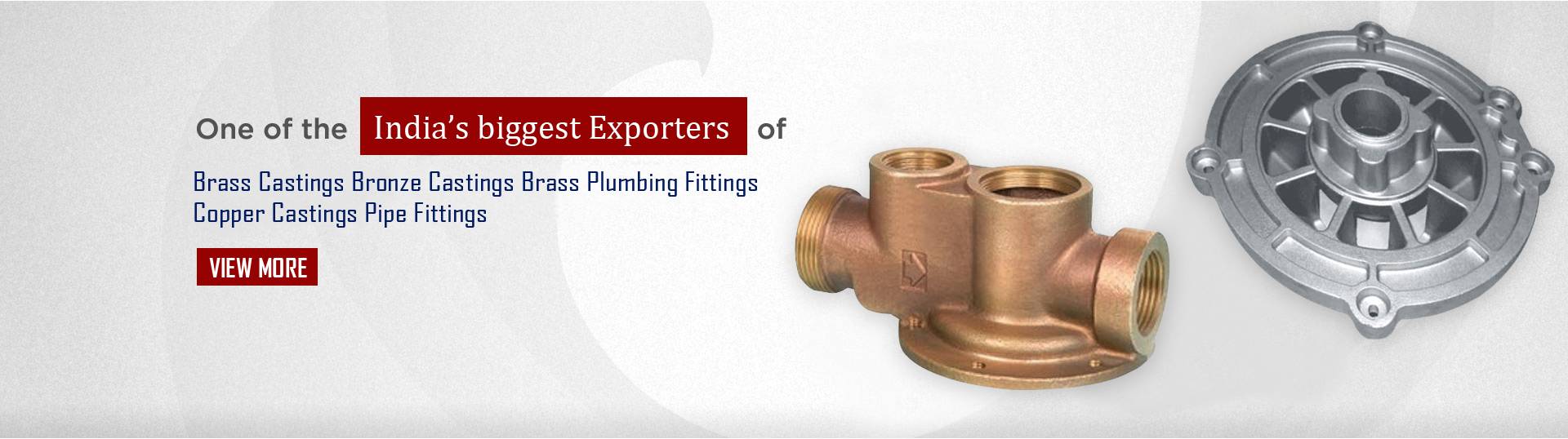


Bronze Permanent Mold Casting: Precision Manufacturing for Critical Applications


Bronze Permanent Mold Casting represents a sophisticated metal forming process that combines the durability and corrosion resistance of Bronze alloys with the dimensional accuracy and surface finish achievable through reusable metal molds. This manufacturing technique has become increasingly vital for industries requiring consistent, high-quality Bronze components with excellent mechanical properties and superior surface characteristics. We are one of the leading manufacturers and exporters of Bronze Permanent Mold Castings from India. We have been supplying precision Bronze castings to the world market for many decades. Our manufacturing facility specializes in producing complex Bronze components that meet stringent international standards including ASTM, DIN, BS, JIS, and IS specifications. With three decades of global exposure and engineering expertise, we deliver Bronze Permanent Mold Castings that serve critical applications across marine, aerospace, automotive, industrial machinery, and specialized equipment sectors. Our commitment to quality, precision machining capabilities, and comprehensive understanding of Bronze metallurgy enables us to manufacture components ranging from intricate valve bodies and pump housings to specialized bearings and wear-resistant mechanical parts that perform reliably in demanding operational environments.
Understanding Permanent Mold Casting Technology
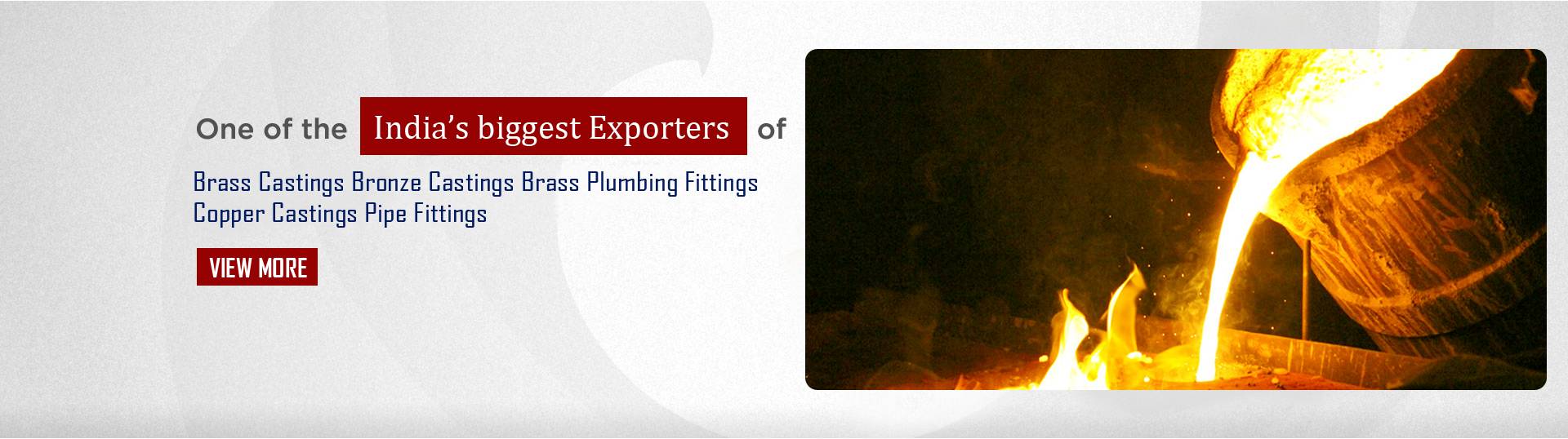
Permanent mold casting, also known as gravity die casting, is a metal casting process where molten metal is poured into reusable molds made from steel, cast iron, or other metallic materials capable of withstanding repeated thermal cycles. Unlike sand casting where molds are destroyed after each casting, permanent molds can produce hundreds or even thousands of castings before requiring refurbishment or replacement. The process begins with preheating the mold to a specific temperature that facilitates proper metal flow while preventing premature solidification. Molten Bronze is then poured into the mold cavity through a gating system designed to minimize turbulence and entrapped gases. Gravity assists the metal in filling the mold completely, though some variations employ vacuum assistance or low-pressure techniques to improve fill characteristics. The metal solidifies directionally from the mold walls toward the center, creating a fine-grained microstructure with superior mechanical properties compared to sand castings. After solidification, the mold opens and the casting is ejected, typically while still at elevated temperature. The mold then undergoes preparation for the next cycle, including cleaning, inspection, and application of mold release agents or coatings. This cyclic process enables high production rates while maintaining dimensional consistency across multiple castings. The permanent mold process is particularly advantageous for Bronze alloys because the controlled cooling rate and dense microstructure enhance the natural properties of Bronze, including strength, wear resistance, and corrosion resistance.
Bronze Permanent Mold Casting: Material Selection and Process Integration
Bronze Permanent Mold Casting specifically refers to the application of permanent mold casting technology to Bronze alloys, which are copper-based materials containing tin, aluminum, silicon, manganese, or other alloying elements. The selection of Bronze for permanent mold casting offers distinct advantages due to the material’s excellent fluidity in the molten state, relatively low melting temperature compared to ferrous metals, and superior castability characteristics. When Bronze alloys are cast in permanent molds, the rapid heat extraction through the metallic mold walls produces a fine-grained structure with improved mechanical properties including higher tensile strength, better ductility, and enhanced fatigue resistance compared to sand cast Bronze. The process is particularly effective for producing complex geometries with consistent wall thickness, internal passages, and intricate external features that would be difficult or impossible to achieve through machining alone. Our manufacturing facility employs advanced permanent mold casting techniques optimized specifically for various Bronze compositions, ensuring proper mold temperature control, gating design, and solidification management. The permanent mold process for Bronze requires careful attention to mold coating selection, as Bronze’s tendency to alloy with iron molds necessitates protective barriers that prevent mold erosion while facilitating easy casting removal. We utilize proprietary mold coatings and release agents developed through decades of experience to maximize mold life while ensuring superior surface finish on Bronze castings. The controlled thermal environment of permanent mold casting also minimizes oxidation and gas porosity issues common in Bronze casting, resulting in sound, pressure-tight components suitable for hydraulic and pneumatic applications.
Advantages and Benefits of Bronze Permanent Mold Casting
Bronze Permanent Mold Casting delivers numerous technical and economic benefits that make it the preferred manufacturing method for precision Bronze components across diverse industries. The process produces castings with superior dimensional accuracy, typically achieving tolerances of ±0.015 inches (±0.38 mm) for small to medium-sized components without secondary machining, significantly tighter than sand casting tolerances of ±0.030 inches (±0.76 mm) or more. Surface finish quality from permanent mold casting reaches 125-250 microinches Ra as-cast, eliminating or reducing post-casting finishing operations and associated costs. The fine-grained microstructure resulting from rapid solidification in metal molds enhances mechanical properties by 15-25% compared to equivalent sand cast Bronze alloys, providing higher tensile strength, yield strength, and elongation values. This improvement in mechanical performance allows designers to reduce component wall thickness and overall weight while maintaining structural integrity, particularly valuable in aerospace and transportation applications where weight reduction directly impacts fuel efficiency and payload capacity. The permanent mold process also produces castings with minimal porosity and excellent pressure tightness, making Bronze permanent mold castings ideal for hydraulic valve bodies, pump housings, and fluid handling components where internal leak paths would compromise performance. From an economic perspective, permanent mold casting offers lower per-piece costs for medium to high production volumes due to faster cycle times, reduced labor requirements, and minimal secondary operations compared to sand casting. The repeatability of the process ensures consistent quality across production runs, reducing rejection rates and inspection costs. Environmental benefits include reduced waste generation since permanent molds are reused thousands of times, and the cleaner casting process minimizes air quality concerns associated with sand casting binders and additives.
Typical Bronze Permanent Mold Casting Products and Applications
Bronze Permanent Mold Castings find extensive application across industries requiring components that combine the corrosion resistance and low-friction properties of Bronze with the precision and mechanical integrity achievable through permanent mold technology. Marine propulsion systems extensively utilize Bronze permanent mold castings for propeller hubs, rudder stocks, through-hull fittings, seawater pump housings, and valve bodies where saltwater corrosion resistance is paramount. The naval architecture sector specifies Manganese Bronze and Aluminum Bronze permanent mold castings for high-strength marine hardware including cleats, chocks, bitts, and steering components that must withstand continuous exposure to harsh marine environments. Industrial pump manufacturers rely on Bronze permanent mold castings for impeller housings, volute casings, wear rings, and bearing housings in applications handling corrosive fluids, slurries, or abrasive media. The water treatment industry uses Bronze permanent mold castings for valve bodies, pump components, and instrumentation housings in municipal water systems, wastewater facilities, and desalination plants. Heavy-duty bearing applications employ permanent mold cast Bronze bearing housings, bushings, and thrust washers where wear resistance and load-carrying capacity are critical performance factors. Electrical and electronic industries specify Silicon Bronze and Phosphor Bronze permanent mold castings for electrical connectors, switchgear components, and grounding hardware requiring excellent electrical conductivity combined with mechanical strength. Architectural applications include permanent mold cast Bronze door hardware, handrails, decorative elements, and memorial plaques where aesthetic appearance complements functional durability. Our manufacturing expertise extends to producing specialized Bronze permanent mold castings for aerospace applications including actuator housings, landing gear components, and instrumentation fittings where weight-critical designs demand the superior mechanical properties achievable through permanent mold technology.
Bronze Machined Castings: Post-Casting Precision Operations
Bronze machined castings represent the integration of permanent mold casting technology with precision machining operations to achieve final component dimensions, surface finishes, and geometric features beyond the capabilities of as-cast surfaces. Our comprehensive manufacturing approach begins with optimized casting design that incorporates appropriate machining allowances, typic typically ranging from 0.030 to 0.060 inches (0.76 to 1.52 mm) on surfaces requiring precision finishing. The superior dimensional consistency of Bronze permanent mold castings minimizes material removal requirements and reduces machining time compared to sand castings, which often exhibit significant dimensional variation requiring larger machining stock. Our facility employs CNC machining centers, precision turning operations, drilling, tapping, boring, and grinding processes to transform as-cast Bronze components into finished parts meeting exacting specifications. Machined features commonly include precision bore diameters with tolerances to ±0.0005 inches (±0.013 mm), threaded holes to ANSI, ISO, or other international standards, precision mounting surfaces with flatness specifications to 0.001 inches (0.025 mm), and complex contours requiring multi-axis machining capabilities. The fine-grained microstructure of permanent mold cast Bronze provides excellent machinability compared to other casting processes, producing superior surface finishes with minimal tool wear. Our engineering team works collaboratively with customers to optimize casting geometry for both castability and machinability, incorporating features such as coring for internal passages, strategically positioned gates that minimize machining disruption, and draft angles that facilitate casting removal while accommodating subsequent machining operations. Quality control throughout the machining process includes dimensional inspection using coordinate measuring machines, surface finish verification, thread gauging, and functional testing as required. We maintain statistical process control protocols that ensure consistency across production runs, with capability studies demonstrating process capability indices exceeding 1.33 for critical dimensions.
Bronze Alloy Selection Guide for Permanent Mold Casting
| Alloy Designation | Composition (%) Cu/Sn/Zn/Others | International Standards | Typical Applications | Key Properties |
|---|---|---|---|---|
| C90300 (Tin Bronze) | 88Cu-8Sn-4Zn | ASTM B505, UNS C90300 | Bearings, bushings, gears | Excellent wear resistance, low friction |
| C90500 (Tin Bronze) | 88Cu-10Sn-2Zn | ASTM B505, UNS C90500 | Heavy-duty bearings, valve components | High load capacity, corrosion resistant |
| C90700 (Tin Bronze) | 89Cu-11Sn | ASTM B505, UNS C90700 | Marine hardware, pump parts | Superior corrosion resistance |
| C92200 (Leaded Tin Bronze) | 88Cu-6Sn-1.5Pb-4.5Zn | ASTM B584, BS 1400 LB2 | Bushings, bearings, gears | Excellent machinability |
| C93200 (High-Leaded Tin Bronze) | 83Cu-7Sn-7Pb-3Zn | ASTM B584, SAE 660 | General bearings, low-speed applications | High anti-friction properties |
| C95400 (Aluminum Bronze) | 85Cu-11Al-4Fe | ASTM B148, BS 1400 AB2, DIN 1714 | Marine propellers, gears, valves | Exceptional strength and corrosion resistance |
| C95500 (Nickel Aluminum Bronze) | 81Cu-11Al-4Fe-4Ni | ASTM B148, UNS C95500 | High-strength marine components | Superior mechanical properties |
| C86300 (Manganese Bronze) | 63Cu-25Zn-3Fe-6Al-3Mn | ASTM B147, BS 2874, DIN 17660 | High-strength structural parts | Excellent strength-to-weight ratio |
| C87300 (Silicon Bronze) | 92Cu-6Si-2Zn | ASTM B411, UNS C87300 | Electrical connectors, architectural | High electrical conductivity |
| C87500 (Silicon Bronze) | 82Cu-14Zn-4Si | ASTM B30, BS 2873 | Marine hardware, fasteners | Good corrosion resistance |
| LG2 (Phosphor Bronze) | 90Cu-10Sn-0.3P | BS 1400 PB1, DIN 1705 | Springs, electrical contacts | Excellent fatigue resistance |
| CuSn12 | 88Cu-12Sn | DIN 1705, EN 1982 | General engineering components | Good casting properties |
| CAC702 (Aluminum Bronze) | 88Cu-9Al-3Fe | JIS H5120 | Japanese marine industry standard | Balanced properties |
| ZCuSn10Pb1 | 89Cu-10Sn-1Pb | Chinese GB 1176 | Industrial machinery components | Cost-effective performance |
Manufacturing Process Flow and Quality Control
Our Bronze Permanent Mold Casting manufacturing process follows a systematic approach ensuring consistent quality and dimensional accuracy across all production runs. The process begins with thorough pattern and mold design using advanced CAD/CAM software that incorporates shrinkage allowances specific to each Bronze alloy composition, typically ranging from 1.5% to 2.0% depending on alloy chemistry and casting geometry. Mold fabrication utilizes high-quality tool steel or cast iron capable of withstanding thousands of thermal cycles, with precision machining ensuring mold cavity dimensions meet design specifications within ±0.001 inches (±0.025 mm). Mold preparation includes application of proprietary ceramic-based coatings that prevent Bronze from alloying with the mold material while facilitating thermal management and casting release. Our melting operations employ electric induction furnaces with precise temperature control maintaining Bronze alloys at optimal pouring temperatures between 1900°F to 2100°F (1038°C to 1149°C) depending on alloy composition. Degassing procedures using argon or nitrogen purging reduce dissolved gases that could cause porosity defects. The pouring operation requires skilled operators who control fill rate and technique to minimize turbulence and oxide inclusion. Mold temperature is maintained between 400°F to 700°F (204°C to 371°C) through controlled heating systems, ensuring proper metal flow and solidification characteristics. After solidification, castings undergo controlled cooling to room temperature, preventing thermal stress and potential cracking. Post-casting operations include gate and riser removal, surface cleaning through shot blasting or vibratory finishing, and comprehensive dimensional inspection. Heat treatment procedures such as stress relieving or solution treatment may be applied depending on alloy type and application requirements. Quality control protocols include spectroscopic analysis verifying alloy composition, radiographic or ultrasonic inspection for internal soundness, dimensional verification using coordinate measuring machines, and mechanical property testing through tensile specimens cast alongside production parts.
Machinery and Equipment for Bronze Permanent Mold Casting
Our manufacturing facility utilizes state-of-the-art equipment specifically configured for Bronze Permanent Mold Casting operations, ensuring consistent quality and production efficiency. The melting department features multiple electric induction furnaces ranging from 500 kg to 2000 kg capacity, providing precise temperature control and rapid melting cycles essential for maintaining proper Bronze chemistry. These furnaces incorporate automatic temperature monitoring systems with digital controllers maintaining melt temperatures within ±5°F (±3°C) of target values. For alloy preparation, we employ automated dosing systems that introduce alloying elements in controlled sequences, ensuring compositional uniformity throughout each heat. Degassing stations equipped with rotary degassing units and porous plug systems remove dissolved hydrogen and other gases that compromise casting integrity. The permanent mold casting area contains multiple tilting and stationary casting stations, each equipped with hydraulic or pneumatic mold clamping systems generating sufficient force to prevent mold separation during metal pouring and solidification. Mold temperature control systems utilize electric resistance heaters, gas burners, or induction heating depending on mold size and production requirements, maintaining optimal thermal conditions throughout production runs. Automated mold coating application systems ensure consistent coverage of release agents and ceramic coatings, critical for casting quality and mold life. Our machining department features CNC vertical and horizontal machining centers with 3, 4, and 5-axis capabilities handling components from small precision parts to large castings exceeding 500 pounds. CNC turning centers with live tooling enable complex geometries in single setups, reducing handling and improving accuracy. Precision grinding equipment including surface grinders, cylindrical grinders, and internal grinding machines achieve final dimensions and surface finishes to exacting specifications. Quality assurance equipment includes coordinate measuring machines with accuracies to 0.0001 inches (0.0025 mm), optical comparators, surface finish measuring instruments, and hardness testers ensuring comprehensive dimensional and material property verification.
Dimensional Tolerances and Technical Specifications
Bronze Permanent Mold Castings from our facility consistently achieve dimensional tolerances significantly tighter than industry standards for conventional casting processes. Linear dimensions on as-cast surfaces typically maintain tolerances of ±0.015 inches (±0.38 mm) for features up to 6 inches in length, with proportional increases for larger dimensions following the formula: tolerance = ±(0.015 + 0.002 × additional inches). Machined surfaces routinely achieve tolerances of ±0.005 inches (±0.13 mm) for standard operations, with precision machining capabilities extending to ±0.0005 inches (±0.013 mm) for critical dimensions. Draft angles on permanent mold castings range from 1° to 3° depending on cavity depth and complexity, significantly less than the 3° to 5° typically required for sand castings. Minimum wall thickness recommendations vary by alloy and casting size, generally ranging from 0.125 inches (3.2 mm) for small components to 0.250 inches (6.4 mm) for larger castings, balancing structural integrity with proper metal flow characteristics. Surface finish on as-cast surfaces typically measures 125 to 250 microinches Ra, with machined surfaces achieving 32 to 63 microinches Ra through standard turning and milling operations, and 16 microinches Ra or better through precision grinding. Flatness specifications for mounting surfaces reach 0.001 inches (0.025 mm) per inch of length after machining, ensuring proper sealing and alignment in assembled components. Roundness and cylindricity tolerances for bearing surfaces achieve 0.0005 inches (0.013 mm) total indicator reading, critical for rotating applications. Thread specifications conform to ANSI B1.1, ISO 68-1, or customer-specified standards, with Class 2B internal threads and Class 2A external threads standard, and precision Class 3 threads available when required.
Why Choose Conex Metals for Bronze Permanent Mold Castings
Selecting Conex Metals as your Bronze Permanent Mold Casting supplier provides distinct advantages built on three decades of manufacturing excellence and global market experience. Our accelerated turnaround time of 4 to 6 weeks from order confirmation to shipment significantly outperforms industry averages, enabled by optimized production scheduling, maintained inventory of common alloys, and streamlined internal processes. Unlike competitors who treat customer communication as an afterthought, our engineering team provides responsive technical support throughout the project lifecycle, from initial design consultation through production and delivery. We maintain English-speaking technical staff available across multiple time zones, ensuring prompt responses to inquiries regardless of customer location. Our flexibility in production quantities accommodates both prototype development with minimum orders as low as 25 pieces and production runs extending to thousands of components, with pricing structures that remain competitive across the volume spectrum. Customized packaging capabilities include customer-specific labeling, logo placement, and specialized protective packaging meeting international shipping requirements for air or sea freight. Our quality assurance protocols exceed standard industry practices, with comprehensive testing and documentation including material certifications, dimensional inspection reports, and photographs of finished components prior to shipment. The technical expertise of our engineering team enables collaborative design optimization, where we review customer drawings and suggest modifications that improve castability, reduce manufacturing costs, or enhance component performance without compromising functionality. Our three decades of export experience to demanding markets including the United States, United Kingdom, Canada, and Australia demonstrates our understanding of international quality standards, documentation requirements, and shipping logistics. We maintain ISO 9001:2015 certification with regular third-party audits validating our quality management systems, providing customers confidence in consistent product quality.
Industries and Applications Served
Bronze Permanent Mold Castings manufactured at our facility serve critical applications across diverse industrial sectors where material performance, dimensional accuracy, and reliability are paramount. The marine industry represents our largest application sector, with components including propeller hubs for commercial vessels, naval craft, and recreational boats, seawater pump housings for cooling systems and ballast operations, valve bodies for shipboard piping systems, and specialized fittings for offshore oil platforms and subsea equipment. Aerospace applications utilize our precision Bronze castings in actuator housings where weight reduction and mechanical strength are critical, instrument panel components requiring dimensional stability across temperature extremes, and specialized bushings for flight control mechanisms. The oil and gas sector specifies our Bronze permanent mold castings for valve trim components in wellhead equipment, pump parts for downhole applications, and instrumentation housings in hazardous classified areas requiring spark-resistant materials. Water and wastewater treatment facilities employ our castings in large-diameter valve bodies, pump components handling corrosive or abrasive fluids, and metering device housings requiring long-term dimensional stability. Industrial machinery manufacturers integrate our Bronze castings into high-load bearing assemblies, gearbox components, hydraulic system housings, and wear-resistant machine elements. The power generation industry uses our castings in cooling water system components, turbine auxiliaries, and specialized fittings for both conventional and renewable energy applications. Defense contractors specify our Bronze castings for naval applications, ordnance components, and specialized equipment where material traceability and quality documentation are mandatory. Architectural and construction markets utilize our decorative and functional Bronze castings for door hardware, handrail systems, memorial plaques, and custom architectural elements requiring both aesthetic appeal and long-term durability.
Technical Properties of Common Bronze Alloys
| Property | C90300 | C90500 | C93200 | C95400 | C86300 |
|---|---|---|---|---|---|
| Tensile Strength (psi) | 40,000 | 45,000 | 35,000 | 90,000 | 90,000 |
| Yield Strength (psi) | 20,000 | 22,000 | 18,000 | 45,000 | 50,000 |
| Elongation (%) | 20 | 18 | 15 | 15 | 18 |
| Brinell Hardness | 70 | 75 | 60 | 170 | 180 |
| Thermal Conductivity (BTU/hr/ft²/°F/in) | 360 | 340 | 380 | 240 | 200 |
| Electrical Conductivity (% IACS) | 15 | 14 | 16 | 14 | 12 |
| Density (lb/in³) | 0.318 | 0.320 | 0.319 | 0.276 | 0.303 |
| Melting Range (°F) | 1825-1925 | 1810-1900 | 1650-1850 | 1900-2020 | 1650-1790 |
| Coefficient of Expansion (in/in/°F × 10⁻⁶) | 10.0 | 10.2 | 10.4 | 9.0 | 11.6 |
Surface Finishing and Plating Options
Bronze Permanent Mold Castings can be supplied with various surface finishes and platings to enhance appearance, improve corrosion resistance, or modify surface properties for specific applications. As-cast surface finish from our permanent mold process typically ranges from 125 to 250 microinches Ra, suitable for many applications without additional processing. For improved appearance or enhanced corrosion protection, components undergo vibratory finishing or tumbling operations that smooth surface irregularities and produce uniform matte finishes. Shot blasting creates consistent surface texture while removing scale and minor surface imperfections, preparing components for subsequent finishing operations or leaving an attractive matte gray appearance. Machined surfaces achieve 32 to 63 microinches Ra through standard operations, with precision grinding producing mirror-like finishes below 16 microinches Ra when required for bearing surfaces or aesthetic applications. Chemical cleaning treatments remove residual oils, oxides, and contaminants, leaving bright metallic surfaces that highlight Bronze’s natural golden color. For applications requiring additional corrosion protection, we offer electroplated nickel coatings in bright, satin, or matte finishes with thickness ranging from 0.0002 to 0.002 inches. Chrome plating provides exceptionally hard, wear-resistant surfaces for components subjected to abrasive conditions or requiring reduced friction characteristics. Tin plating offers excellent solderability and food-grade compliance for components in potable water or food processing applications. Organic coatings including powder coating and liquid painting systems provide color options and enhanced corrosion protection, particularly for architectural applications. Clear coating systems preserve Bronze’s natural appearance while preventing tarnishing and oxidation during storage and service. Passivation treatments chemically enhance the natural oxide layer on Bronze surfaces, improving corrosion resistance without altering dimensions or appearance.
Production Turnaround and Lead Times
Our streamlined manufacturing processes and efficient production planning enable competitive turnaround times for Bronze Permanent Mold Castings while maintaining uncompromising quality standards. Standard production lead time for new tooling development and first article production ranges from 4 to 6 weeks from receipt of approved drawings and purchase order, encompassing pattern design, mold fabrication, initial casting trials, dimensional verification, and customer approval. For repeat orders utilizing existing tooling, production cycles compress to 3 to 4 weeks depending on order quantity and current production schedule. Rush service capabilities accommodate urgent customer requirements with expedited processing reducing lead times to 2 to 3 weeks for existing tooling situations, subject to capacity availability and potential premium charges. Our production scheduling system maintains real-time visibility of work-in-process, enabling accurate delivery commitments and proactive communication regarding order status. Prototype development projects receive priority handling with dedicated engineering resources, typically delivering initial samples within 2 to 3 weeks for design validation and testing. Large production runs benefit from planned production schedules that may extend lead times while optimizing manufacturing efficiency and reducing per-piece costs through dedicated production campaigns. International shipping considerations add approximately 1 to 2 weeks for sea freight to North American and European destinations, with air freight options available for time-critical shipments reaching customers within 3 to 5 days. Our commitment to on-time delivery exceeds 95% based on originally committed delivery dates, demonstrating the reliability of our production planning and execution capabilities.
Packaging, Documentation, and Shipping Excellence
Our comprehensive approach to packaging and shipping ensures Bronze Permanent Mold Castings arrive at customer facilities in perfect condition with complete documentation supporting receiving inspection and inventory control. Individual component packaging utilizes VCI (Vapor Corrosion Inhibitor) paper or plastic wrapping that protects Bronze surfaces from atmospheric corrosion during storage and transit, particularly important for international shipments exposed to varying humidity conditions. Components are then organized in custom corrugated boxes with internal dividers preventing movement and contact damage, or placed on custom pallets with shrink wrap and corner protection for larger castings. All packages include clearly marked external labels identifying contents, quantity, customer purchase order number, and handling instructions in English and destination country language where applicable. For customers requiring private labeling, we accommodate custom packaging with company logos, part numbers, and specific handling instructions incorporated into packaging materials. Export documentation includes commercial invoices detailing proper customs classification codes, packing lists with gross and net weights, certificates of origin when required for preferential trade agreements, and material certifications documenting alloy chemistry, mechanical properties, and compliance with specified standards. Quality documentation accompanies each shipment including dimensional inspection reports showing measured values versus specification tolerances, material test certificates from spectrographic analysis, heat treatment certifications when applicable, and photographic documentation of finished components. For customers implementing statistical process control programs, we provide capability studies and control charts demonstrating process stability and capability. Shipping method selection considers customer requirements for cost versus transit time, with consolidated sea freight providing economical transport for large orders, air freight enabling rapid delivery for time-critical requirements, and courier services handling small packages requiring door-to-door tracking and expedited customs clearance.
Customer Testimonials: Real-World Performance and Partnership
James Mitchell, Procurement Manager, Marine Systems Inc., Seattle, USA
“We’ve been sourcing Bronze permanent mold castings from Conex Metals for our commercial marine pump housings for over eight years, and the consistency of quality never ceases to impress us. Their engineering team’s willingness to collaborate on design optimization saved us nearly 22% in material costs on our latest pump series while actually improving performance characteristics. The turnaround time of 4 weeks beats our domestic suppliers by several weeks, and the communication throughout the process is exceptional. Every shipment arrives with comprehensive documentation that sails through our receiving inspection, and we’ve experienced zero rejections in our last fourteen orders totaling over 3,700 castings. Their understanding of ASTM specifications and ability to provide material certifications meeting our quality system requirements makes them an invaluable partner in our supply chain.”
David Thompson, Engineering Director, Precision Fluid Controls Ltd., Birmingham, UK
“Transitioning our valve body production to Conex Metals’ Bronze permanent mold casting process was one of our best manufacturing decisions in recent years. The dimensional accuracy they achieve allows us to minimize secondary machining operations, reducing our overall production costs by approximately 18% compared to our previous sand casting supplier. What truly distinguishes Conex Metals is their proactive technical support—their engineers identified a potential porosity issue in our original design and suggested gating modifications that completely eliminated the problem before we even produced first articles. The customized packaging with our company labels and part numbers integrates seamlessly into our inventory system, and their flexibility in handling both small development batches and production runs gives us the agility we need in today’s competitive market. After three years and multiple product lines, they remain our preferred Bronze casting supplier.”
Comprehensive Technical Q&A: Bronze Permanent Mold Casting
What minimum order quantities do you require for Bronze permanent mold castings? Our flexible production capabilities accommodate minimum orders of 25 pieces for prototype and development projects, with optimal pricing structures beginning at quantities of 100 pieces. We work with customers to balance tooling amortization costs against per-piece production expenses, often recommending initial prototype quantities followed by production orders that leverage existing tooling investment.
Can you modify existing customer designs to improve castability or reduce manufacturing costs? Our engineering team routinely reviews customer drawings and provides value engineering recommendations that improve castability, reduce material consumption, eliminate secondary operations, or enhance component performance. These collaborative design optimization services have delivered cost reductions of 15% to 30% for numerous customers while maintaining or improving functionality and quality.
What dimensional tolerances can you achieve on Bronze permanent mold castings? As-cast tolerances typically maintain ±0.015 inches on dimensions up to 6 inches with proportional increases for larger features, while machined surfaces routinely achieve ±0.005 inches with precision operations reaching ±0.0005 inches. These tolerances significantly exceed sand casting capabilities and often eliminate secondary operations required with conventional casting processes.
Which international standards do your Bronze castings comply with? Our Bronze permanent mold castings conform to ASTM B505, B584, B148, B30 specifications for various alloys, BS 1400 series British standards, DIN 1705 and 17660 German standards, JIS H5120 Japanese specifications, and IS 319 Indian standards. We provide material certifications and test reports documenting compliance with specified standards for every shipment.
How do permanent mold Bronze castings compare with sand castings in mechanical properties? Bronze permanent mold castings exhibit 15% to 25% higher tensile strength, improved ductility, and superior fatigue resistance compared to sand cast equivalents due to faster solidification rates producing finer grain structures. The denser microstructure also provides better pressure tightness and reduced porosity, critical for hydraulic and pneumatic applications.
What maximum casting size and weight can your facility produce? Our permanent mold casting equipment handles components up to 36 inches in maximum dimension and 150 pounds in weight, covering the majority of Bronze casting applications. For larger components exceeding these parameters, we can recommend alternative processes or discuss custom tooling solutions to meet specific requirements.
Do you provide material certifications and test reports with shipments? Every shipment includes comprehensive documentation featuring material certifications with spectrographic analysis results, dimensional inspection reports showing measured versus specified dimensions, mechanical property test data when specified, and photographs of finished components. This documentation supports customer receiving inspection, quality system requirements, and traceability needs.
Can you produce Bronze castings to customer-specific alloy compositions? While we maintain extensive inventory of standard Bronze alloys meeting international specifications, our metallurgical capabilities extend to producing custom alloy compositions when customer applications demand specific property combinations. We work with customers to develop alloy specifications, conduct property testing, and validate performance characteristics before production implementation.
What surface finishes are available on Bronze permanent mold castings? As-cast surfaces achieve 125 to 250 microinches Ra, machined surfaces reach 32 to 63 microinches Ra through standard operations, and precision grinding produces mirror finishes below 16 microinches Ra. Additional finishing options include shot blasting, vibratory finishing, chemical brightening, and various plating processes including nickel, chrome, and tin for enhanced corrosion protection or aesthetic requirements.
How do you ensure consistent quality across production runs? Our ISO 9001:2015 certified quality management system implements statistical process control, first article inspection protocols, in-process dimensional verification, final inspection procedures, and comprehensive documentation practices. We maintain capability studies demonstrating process capability indices exceeding 1.33 for critical dimensions, ensuring consistent quality meeting customer specifications across all production quantities.
What are typical applications for Aluminum Bronze permanent mold castings? Aluminum Bronze alloys like C95400 and C95500 excel in marine propellers, pump impellers, valve components, gears, and structural hardware where exceptional strength combined with superior corrosion resistance justifies premium material costs. These alloys provide strength approaching low-alloy steels while maintaining Bronze’s corrosion resistance in seawater and chemical environments.
Can you handle secondary operations like machining, plating, and assembly? Our vertically integrated facility provides comprehensive secondary operations including CNC machining, drilling, tapping, grinding, heat treatment, plating, painting, and sub-assembly services. This single-source capability simplifies supply chain management, reduces lead times, and provides single-point accountability for finished component quality.
What payment terms and international shipping options do you offer? Standard payment terms include T/T (wire transfer) with 30% advance and 70% against shipping documents, with Letter of Credit options available for established customers. International shipping utilizes reputable freight forwarders with consolidated sea freight for economical large shipments, air freight for expedited requirements, and door-to-door courier services for samples and small orders.
How do you handle rush orders or expedited production requirements? Our production scheduling system accommodates rush requirements through expedited processing, overtime operations, and priority machining allocation. Rush service typically compresses standard lead times by 30% to 40% subject to current capacity utilization, with proactive communication regarding feasibility and potential premium charges before commitment.
What advantages does permanent mold casting offer over investment casting for Bronze components? Permanent mold casting provides faster production cycles, lower tooling costs, and more economical per-piece pricing for medium to high production volumes compared to investment casting. While investment casting excels for extremely complex geometries and very small features, permanent mold casting delivers superior dimensional accuracy and mechanical properties for the majority of Bronze component applications at significantly lower total cost.
Glossary of Technical Terms in Bronze Permanent Mold Casting
Permanent Mold: Reusable metal mold constructed from steel or cast iron capable of producing hundreds or thousands of castings before requiring refurbishment, offering superior dimensional accuracy and surface finish compared to expendable molds like sand or investment casting shells.
Bronze Alloy: Copper-based metal containing tin, aluminum, silicon, manganese, or other alloying elements that enhance specific properties like strength, corrosion resistance, wear resistance, or machinability, with compositions standardized by international specifications including ASTM, BS, DIN, and JIS.
Gating System: Network of channels including sprue, runners, and gates that control molten metal flow from the pouring basin into the mold cavity, designed to minimize turbulence, prevent gas entrapment, and promote directional solidification for sound castings free from porosity defects.
Degassing: Process of removing dissolved gases, primarily hydrogen, from molten Bronze through techniques including vacuum treatment, inert gas purging, or chemical degassers, preventing gas porosity defects that compromise mechanical properties and pressure tightness in finished castings.
Draft Angle: Slight taper incorporated into casting design perpendicular to the parting line facilitating casting removal from the mold without damage, typically ranging from 1° to 3° for permanent mold castings compared to 3° to 5° required for sand castings.
Shrinkage Allowance: Dimensional compensation incorporated into pattern and mold design accounting for volumetric contraction as molten Bronze solidifies and cools to room temperature, typically 1.5% to 2.0% depending on alloy composition and casting geometry.
Machining Allowance: Extra material deliberately incorporated on casting surfaces requiring final dimensional accuracy or superior surface finish, enabling material removal through machining operations while ensuring finished dimensions meet specification tolerances.
Grain Structure: Microscopic crystalline arrangement within solidified metal determining mechanical properties including strength, ductility, and toughness, with fine-grained structures from rapid permanent mold cooling providing superior properties compared to coarse-grained sand casting structures.
Mold Coating: Protective ceramic-based material applied to permanent mold surfaces preventing Bronze from alloying with the mold material while controlling heat transfer rate, facilitating casting release, and extending mold service life through thousands of casting cycles.
Pressure Tightness: Casting characteristic indicating absence of interconnected porosity or defects allowing fluid leakage under hydraulic or pneumatic pressure, critical for valve bodies, pump housings, and fluid handling components in high-pressure applications.
Heat Treatment: Controlled heating and cooling processes including stress relieving, solution treatment, or aging applied to Bronze castings to modify mechanical properties, relieve residual stresses from solidification, or optimize microstructure for specific applications.
Traceability: Documentation system tracking material origin, processing history, inspection results, and final disposition for each production lot or individual casting, essential for aerospace, defense, and critical applications requiring comprehensive quality records.
Related Search Terms for Bronze Permanent Mold Casting
Bronze gravity die casting, aluminum bronze castings, manganese bronze components, tin bronze bushings, marine bronze castings, copper alloy permanent mold, precision bronze casting, high-strength bronze parts, corrosion-resistant bronze castings, bronze valve bodies, bronze pump housings, permanent mold vs sand casting, bronze bearing housings, silicon bronze castings, naval bronze components, bronze propeller hubs, architectural bronze castings, bronze gear blanks, leaded bronze bearings, phosphor bronze castings, bronze electrical components, industrial bronze castings, machined bronze parts, custom bronze alloys, bronze casting manufacturer India, export bronze castings, ASTM bronze specifications, BS bronze standards, DIN bronze alloys, bronze casting tolerances, bronze surface finishes, bronze mechanical properties, permanent mold casting process, bronze mold design, bronze casting applications, marine grade bronze, seawater resistant bronze, high-load bronze bearings, wear-resistant bronze, bronze for pumps, bronze for valves, bronze hardware castings, bronze instrumentation parts, aerospace bronze components.
Performance Metrics and Quality Standards
Bronze Permanent Mold Castings manufactured at our facility consistently meet or exceed performance benchmarks established through decades of production experience and customer feedback. Mechanical property testing on sample castings from each production heat demonstrates tensile strength values typically achieving 95% to 105% of nominal specification values with minimal variation, reflecting the metallurgical consistency of our permanent mold process. Dimensional capability studies conducted on critical features across production runs yield process capability indices (Cpk) exceeding 1.33 for machined dimensions and 1.10 for as-cast dimensions, well above the 1.00 minimum threshold indicating stable, capable manufacturing processes. Surface finish measurements average 180 microinches Ra on as-cast surfaces and 45 microinches Ra on standard machined surfaces, providing aesthetic appearance and functional performance exceeding typical customer requirements. Porosity evaluation through radiographic inspection demonstrates sound casting structure with acceptance rates exceeding 98% for pressure-tight applications, minimizing rejection costs and delivery delays. Delivery performance metrics show 96% on-time delivery rate based on customer-committed dates, reflecting reliable production scheduling and proactive communication when schedule challenges emerge. Customer satisfaction surveys conducted annually yield average ratings of 4.6 on a 5-point scale across quality, delivery, communication, and technical support categories, demonstrating sustained excellence across all aspects of customer interaction.
Standard Size Ranges for Bronze Permanent Mold Castings
| Casting Type | Minimum Size | Maximum Size | Typical Weight Range | Wall Thickness Range |
|---|---|---|---|---|
| Bearing Housings | 2″ × 2″ × 1″ | 18″ × 12″ × 8″ | 0.5 lb – 40 lb | 0.188″ – 0.500″ |
| Valve Bodies | 1″ × 1″ × 0.75″ | 14″ × 10″ × 6″ | 0.3 lb – 25 lb | 0.156″ – 0.375″ |
| Pump Components | 3″ × 3″ × 2″ | 24″ × 16″ × 10″ | 1 lb – 65 lb | 0.219″ – 0.625″ |
| Flanges | 3″ diameter | 20″ diameter | 0.5 lb – 35 lb | 0.188″ – 0.500″ |
| Marine Hardware | 2″ × 1.5″ × 1″ | 16″ × 12″ × 8″ | 0.4 lb – 45 lb | 0.188″ – 0.750″ |
| Bushings | 0.75″ OD × 1″ length | 8″ OD × 12″ length | 0.1 lb – 15 lb | 0.125″ – 0.375″ |
| Propeller Hubs | 4″ diameter | 24″ diameter | 2 lb – 80 lb | 0.250″ – 1.000″ |
| Electrical Components | 1″ × 1″ × 0.5″ | 8″ × 6″ × 4″ | 0.2 lb – 10 lb | 0.125″ – 0.250″ |
| Architectural Fittings | 2″ × 2″ × 1″ | 20″ × 14″ × 6″ | 0.5 lb – 50 lb | 0.156″ – 0.500″ |
Request Your Quote Today: Partnering for Manufacturing Excellence
Experience the difference that three decades of Bronze Permanent Mold Casting expertise delivers to your critical component requirements. Our team stands ready to collaborate on your next project, whether you need prototype development, design optimization consultation, or high-volume production of precision Bronze castings meeting exacting specifications. Contact us today to discuss your specific application requirements and discover how our manufacturing capabilities, technical expertise, and commitment to customer satisfaction can enhance your supply chain performance and product quality.
Get in touch with Conex Metals:
- Email us for detailed technical brochures, material specifications, and capability documentation: sales@conex-casting.com
- Request a quote by sending your drawings and specifications to sales@conex-casting.com
- Call our technical team for immediate assistance: +91-22-43449300 / +91-22-43449323 (India office hours: 9:00 AM – 6:00 PM IST)
- Visit our website for comprehensive product information and online inquiry submission: www.conex-casting.com
We respond to all inquiries within 24 hours and provide detailed quotations within 48 hours of receiving complete specifications and drawings. Our team looks forward to discussing how Bronze Permanent Mold Castings from Conex Metals can deliver the performance, quality, and reliability your applications demand.